Schrodinger’s Call Review (Switch)
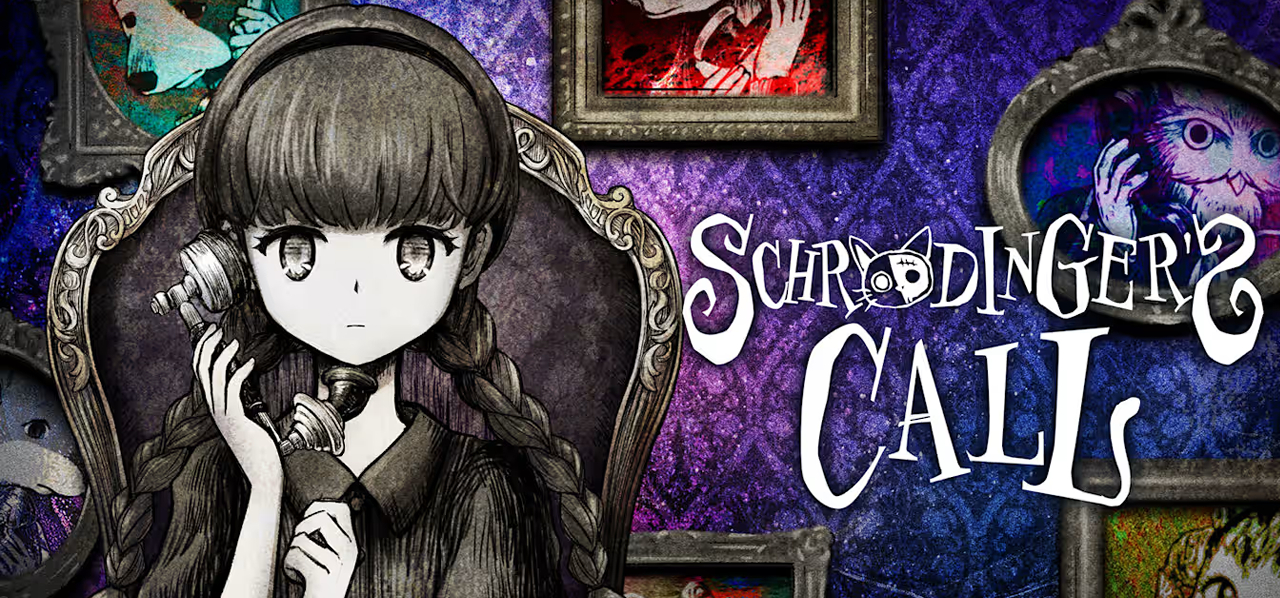
Hello?
Publisher: SHUEISHA GAMES
We all know about the thought experiment known as Schrodinger’s Cat. We learnt it in school and a lot of media has referenced it, from it being used as a clever joke, referencing it to help convey/strengthen its themes or arguments, just straight up referencing it or Schrodinger himself as an easter egg or so it directly plays into the plot, and anything else in between. Not to mention doing “Schordinger’s [enter text here]” to joke about things like how people flip flop on something being a joke or satire (for example) or not based on public reception. However, what if there was a whole game based on this thought experiment? A game that not only references it to strengthen its plot and themes, but takes it a step further? Well, you’ll get a little game named Schrodinger’s Call. A visual novel, to be exact, that I of course had to check out. So let’s dive right on into my review and see if it’s as good as everyone is saying.
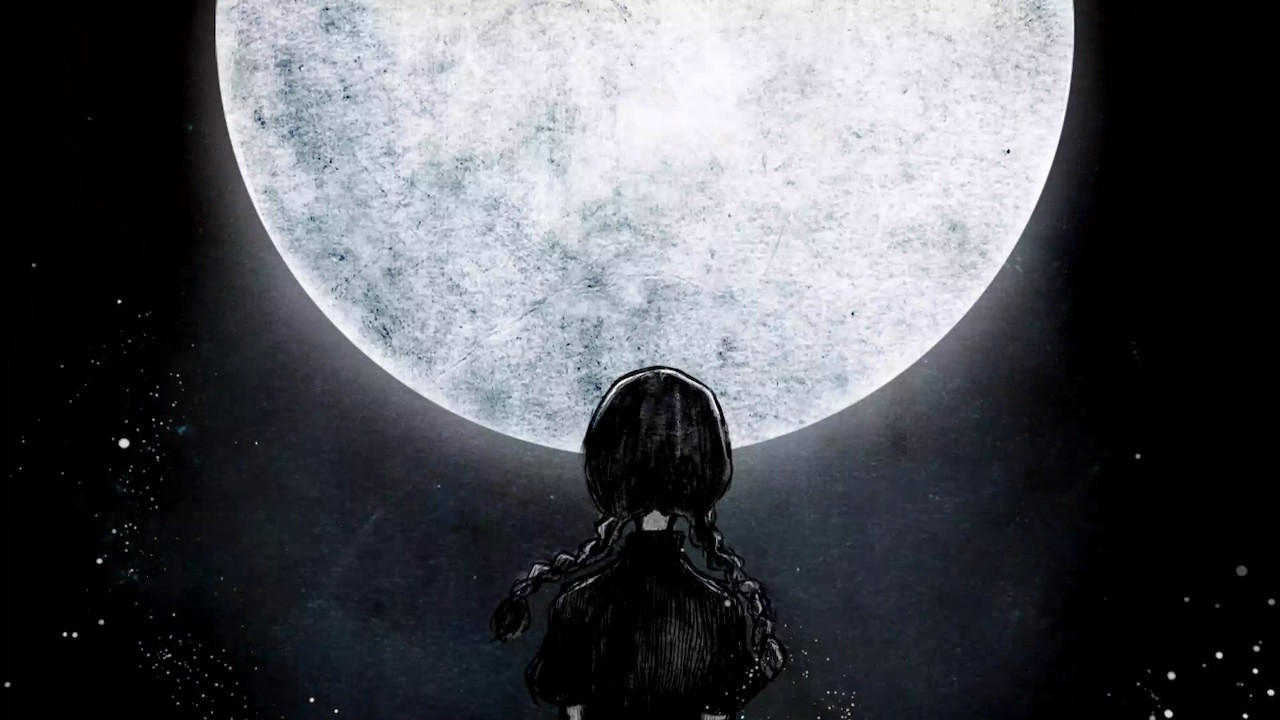
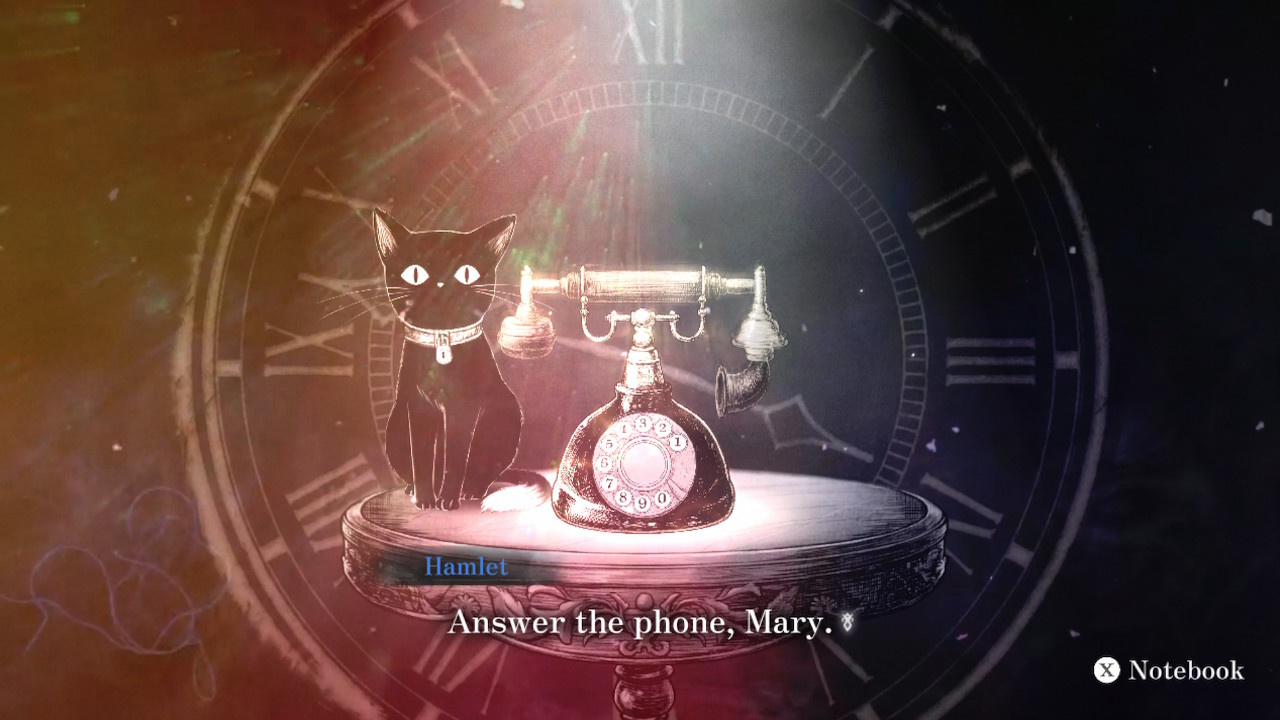
Schrodinger’s Call starts with our protagonist in a dark room that seems to go forever no matter how long she’s walking. She’s not left in the dark for long as soon another voice speaks to her and catches her up to where she’s at and what she’s going to be doing through the course of the game. This voice is a talking cat named Hamlet and our lovely protagonist is a lovely girl named Mary. Mary actually has amnesia, which also extends to her having bad memory in general, and she’s currently in a state in between life and death. Or Limbo if you will. Why? Well, it turns out that the apocalypse has happened and everyone has or, well, will die. The moon will crash into the Earth in approximately 21 nanoseconds where everyone will die. As you might expect, this abrupt end has caused everyone to be left with unfinished business and thus unable to move on. So, how does Mary factor into all of this? Well, it turns out that Mary is the world’s last Confidant.
As the world’s last Confidant, Mary’s role is to help humanity accept death and move on. To do that, all Mary has to do is take phone calls where she just has to listen, talk to them, and empathize with those that are on the other end of the call. Of course, this is a simplified version of her duties as it is a bit more complicated. Hamlet even has this whole protocol of how it usually goes. First is narrowing it down to a single spirit. Considering there are many many spirits stuck in limbo suffering underneath their unresolved grief and burdens, they all want to talk to Mary at the same time which is a bit overwhelming. To narrow this way down, Mary must define a spirit’s existence so they can take shape and establish a connection. For Mary, she defines a spirit’s existence through sharing her convictions which will connect her to spirits that share that same conviction until she lands on someone that also shares the same grief. You’ll then establish a connection, which will grant you their phone number, before the call disconnects. You’ll then be able to call and receive calls from your new client as well as from third party numbers, which connect to spirits that had an impact on her client’s life in one way or another. Granted, you won’t be able to connect to the spirit that makes up the other half of your client’s burden.
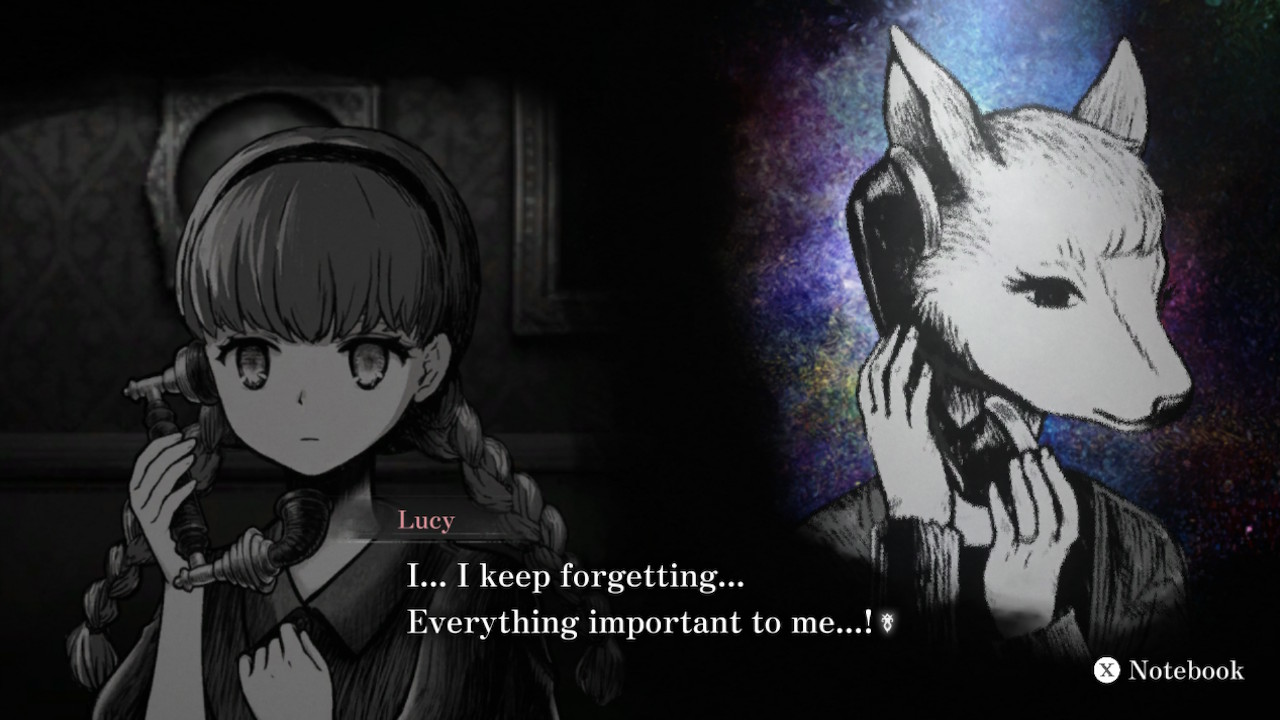
Once Mary defines her client’s existence and establishes a connection, her role finally starts as the world’s last Confidant. Her goal is to help her clients with their unfinished business and hopefully lift the burden from their shoulders. However, they also start with their memories slipping through their fingers making it a tad more difficult. Luckily, Mary just needs to connect with them, listen, and remind them of their precious memories (as well as their painful memories). You’ll get the information you need through various means whether it’s from the client directly, from their unfinished call that you work up to through the whole chapter, or from the third party numbers. Mary jots down all important information in her handy notebook so she, and you by extension, can go back and reference information when needed. As you help these spirits remember their memories and console them, Mary’s efforts in resolving their unfinished business and working through their grief and trauma with them will eventually result in them being able to move on. And hey, maybe she’ll also be able to help the third party callers too while she’s at it.
Helping spirits move on also has the benefit of helping Mary regain her memories little by little. However, I assure you that you will not expect what this game has in store for you.
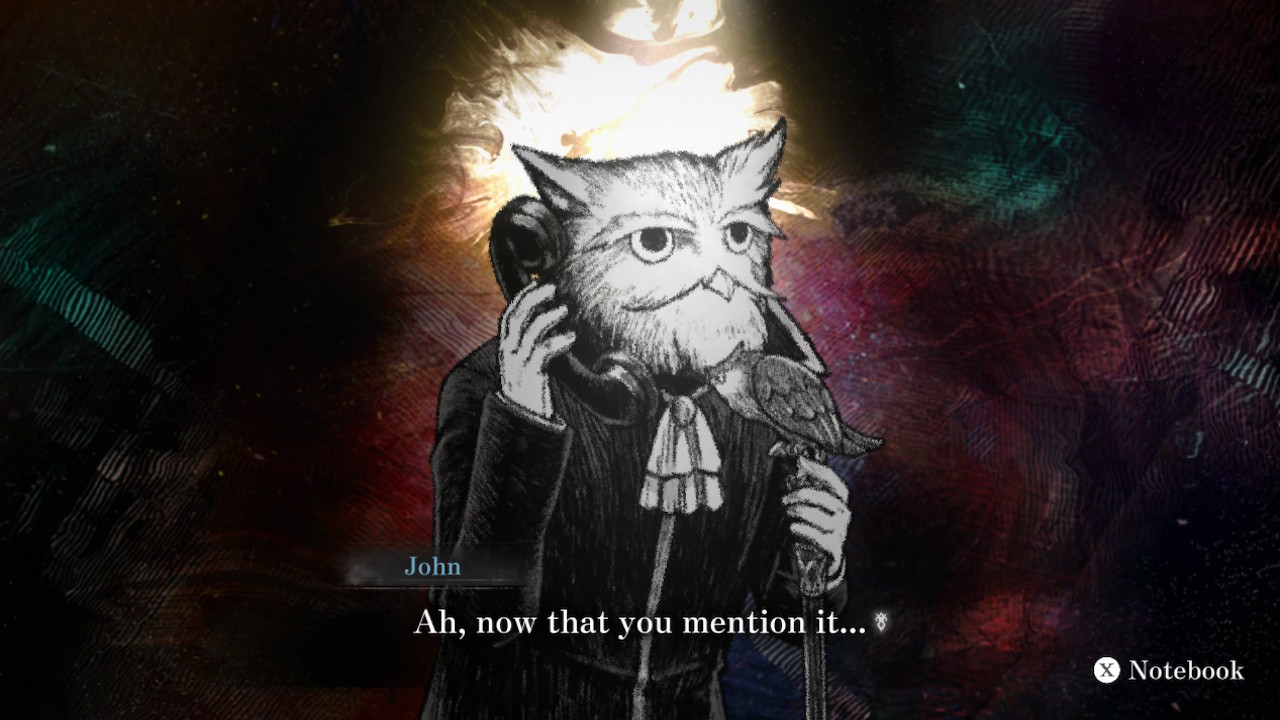
Also don’t worry, Mary isn’t left to stand for the entire duration of the whole game. Not only does the phone also manifest a table, but a chair also manifests for Mary to sit on and a background with frames so it feels like she’s not just in an endless void. It’s like a little cozy nook for our little Mary.
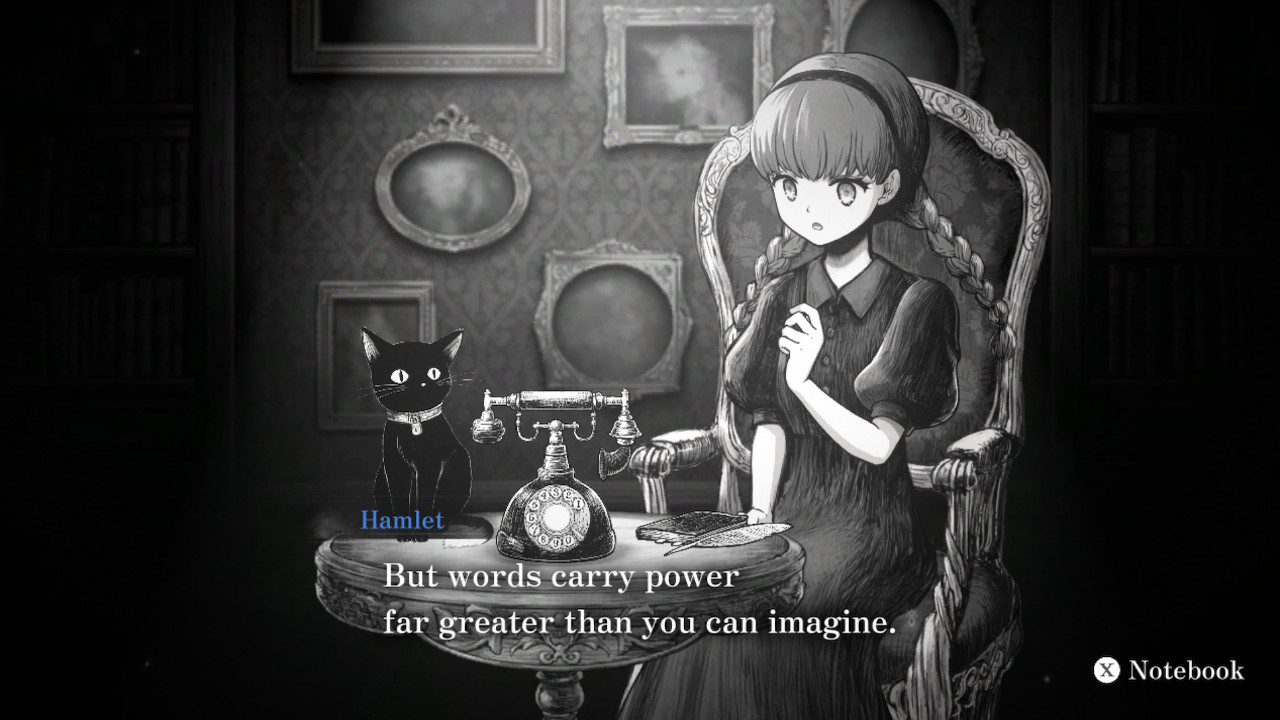
I ended up really enjoying the story of Schrodinger’s Call. To mix things up a bit here, I wanted to start with my thoughts on the writing style. I quite enjoyed the writing style here. Was I annoyed with how much repetition played a part? Yeah, but it was mainly annoying in Chapter 1 and after that I think I just got used to it. That and it shifts to you telling the client or the other caller what you just learned so it feels more natural. I honestly feel the writing style has a certain cozy feeling to it. I just love the way that conversations just flow, the way information is brought up, and the way that it so easily conveys the emotions that the characters are feeling. You can’t help but smile as characters reminisce on their precious memories, as you can almost feel them smiling through the text, but you can also feel the weight that their grief and trauma has on them when it rears its head (so much that I personally had to take a quick break when it got too heavy). But then everything lifts as you get to the final stretch where they’re finally able to move on and you find yourself smiling and totally not crying. Every character also ended up having their own voice, which was quite nice as well. Every character you’ll talk to are so distinctive from one another despite sharing convictions or the same grief.
Talking about the characters, I did want to mention how wonderful they all were. They all felt like real people and real conversations, which I feel is greatly helped by these characters being able to be grey. The characters are allowed to be a bit cross sometimes or to do bad things or do something that is for the greater good. They’re allowed to be flawed characters where you see why they made the decisions that they made. You get to peak into the window into their complicated lives and this also ends up helping you empathize with these characters. It also helps further the themes of the narrative. There are two or three minor characters that do lean more towards being evil, but you do get a small sense that there is perhaps something a bit more to them.
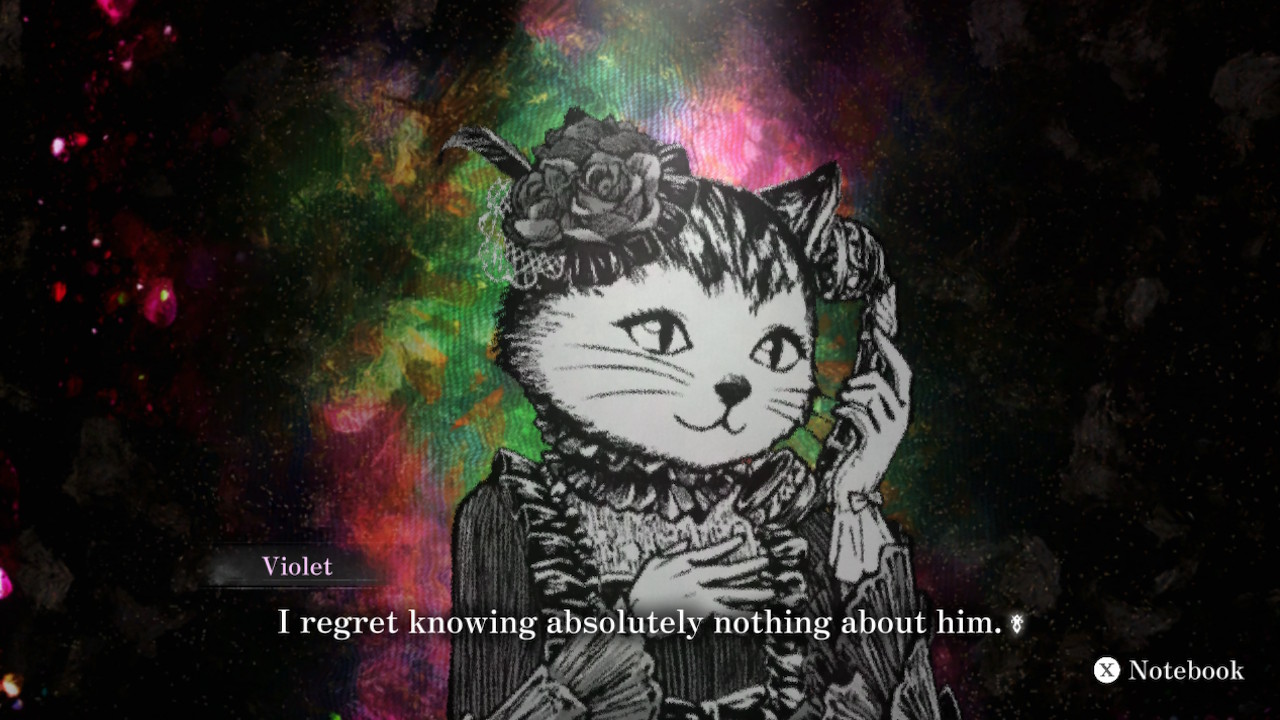
I found it a bit hard to really organize my thoughts on this game without spoiling it. A lot of the praise that I have is tied to the finale (which I personally say starts towards the end of Chapter 4…you’ll know when you get there). Schrodinger’s Call works so much better if you go in not knowing and I certainly don’t want to spoil it so I’ll do my best. I honestly believe that this game’s narrative is so beautiful and brilliantly handled. The way the game builds things up, both within the chapters and with the overarching narrative, was so brilliantly done. With the client stories, they build up so wonderfully to their conclusions. It’s a bit hard to really describe as it makes more sense once you experience the game, but the characters are just simply wonderful to talk to and I think it was brilliant how the mystery of their grief, burden, and unfinished burden is hinted at when your defining their existence and then gets established once you listen to their unfinished call (which is perfectly placed in the beginning of the chapter). And this mystery continues as you slowly uncover what truly happened. Chapters are a bit of an emotional rollercoaster too, which I think it’s obvious why haha.
As for the overarching narrative, it is also brilliantly done with the way the game builds up to it. You won’t know it, but the game starts building up to the finale (and the finale of the finale) right when you open the game. Little hints and scenes are dropped as you progress, but you don’t have nearly the whole picture. At least, that’s what you think. Plus, you are more focused on the whole being the world’s last Confidant thing. However, once you cross the threshold that puts you into the finale (which again, I personally think starts at the end of Chapter 4) everything starts clicking into place. The build up doesn’t stop once you step into the finale, but still builds up as there is a lot to uncover, reveal, and unpack. Everything starts to make a whole lot of sense once you have the information you’re given during the finale. Every single decision that the game made, that you maybe thought was a bit weird, clicks into place. Things that you didn’t know were connected connects. It’s like you were putting together one of those jigsaw puzzles designed to be really hard and you just realized that you didn’t take one of the baggies out of the box. The reveals here are unexpected in the best way possible as you do finally sense that everything was building up to it.
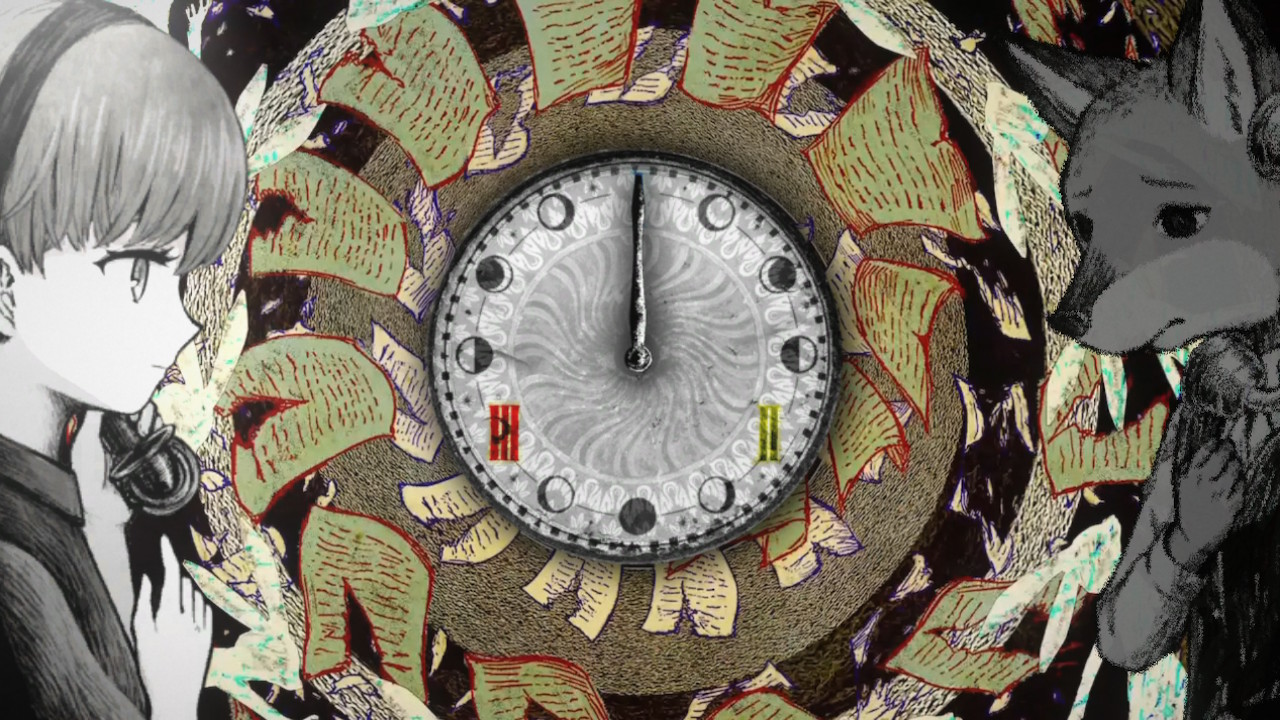
And oh my gosh the ending sequence. The finale of the finale. It’s just so haunting and beautiful. The whole game builds up to its ending sequence that while it was totally unexpected and surprising, but at the same time it’s not as the whole game is you preparing for it. Then once you get to the end, it’s just so beautifully done and really impactful. I’m not going to talk about it despite really wanting to, but lets just say I’m glad I played the final chapter when I was alone.
Oh, and can’t just not talk about how the Schrodinger’s Cat thought experiment ended up playing a role. I loved how Schodinger’s Call went a step further and basically made every aspect of this game embody it. You will learn why the game is called what it’s called, which is a direct parallel to the thought experiment, but the more you think about the game the more you realize that every aspect of the game embodies it. Once you hit that ending you might just end up doing what I did: thinking back at the various aspects and choices that the game made and realizing how deep and subtle the writers made it. Heck, while I do feel that the game is pretty direct with what really happened, you can even view the events as a whole both real and fake.
I couldn’t find a good place to put this at, so I’ll put this here, but I do also think Schordinger’s Call does a really good job with it’s subtle and vague aspects. There are some things that don’t get confirmed, or things that you just have to assume based on the information you have, but I do believe the game does a great job at handling it. It doesn’t feel like those were unresolved plot points due to how it was incorporated into the narrative. It was important for Mary and the people around her, but it wasn’t important for the overall narrative, if that makes sense. I suppose a better way to put it is that the narrative didn’t give an impression that it was going to reveal it, but it was used to help build up what the reveals that happen in the finale and for you to understand Mary and the other characters. They were important but also not important (oh my gosh I just realized while writing this is another parallel to Schordinger’s Cat though experiment).
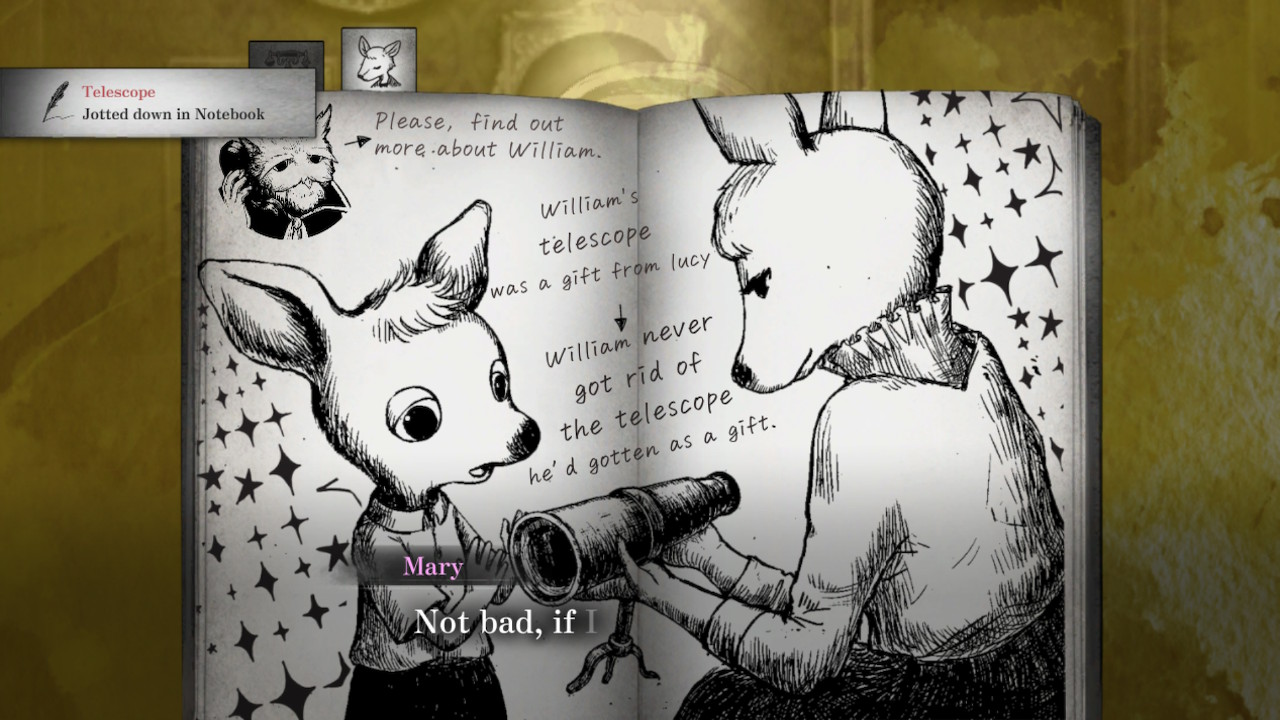
Once you finish the game, you’ll be able to access Mary’s notebook through the main menu. While you do get a final last look after the credits, this does allow you to look back at her notebook and there is one last update to her notebook. Also, I just have to say I love how the main menu changes to reflect the ending. The ending is so impactful and emotional and seeing the new main menu really hits it home even more.
As for negatives, there are a couple that I can think of. This game does have a lot of repetition and flashbacks to lines that you just read. This was a bit annoying, especially during Chapter 1, but for the most part it was fine, I do feel it ended up playing into the overall narrative, and it does make a lot more sense once you get to the finale. There are also a few inconsistencies in the script (with most of them being during Chapter 4*). While I quite liked how new information is revealed and how misunderstandings happen here, as it is quite understandable that they’ll remember information later on, but there was one instance where the misunderstanding felt a bit forced. Schrodinger’s Call also does lean more towards being a kinetic novel than a visual novel as choices are basically either just two halves of what Mary will say, lets you pick which order you bring up topics, asks you to pick the right keyword(s) from the notebook, or quizzes you to see if you were paying attention. I didn’t really mind this, and personally it does suit the narrative better, but I’m sure there are those that will be disappointed that the choices either have no effect for very minor dialogue changes. Though, the last negative is related to this one a bit as some segways between topics/keywords just don’t work at all and causes it to be clunky. And it can be a bit annoying having to open the notebook like five times in a row to progress.
[[Spoilers]]*There’s like three different variations of what’s said to be written on a card. Even though you see what’s written on the card yourself.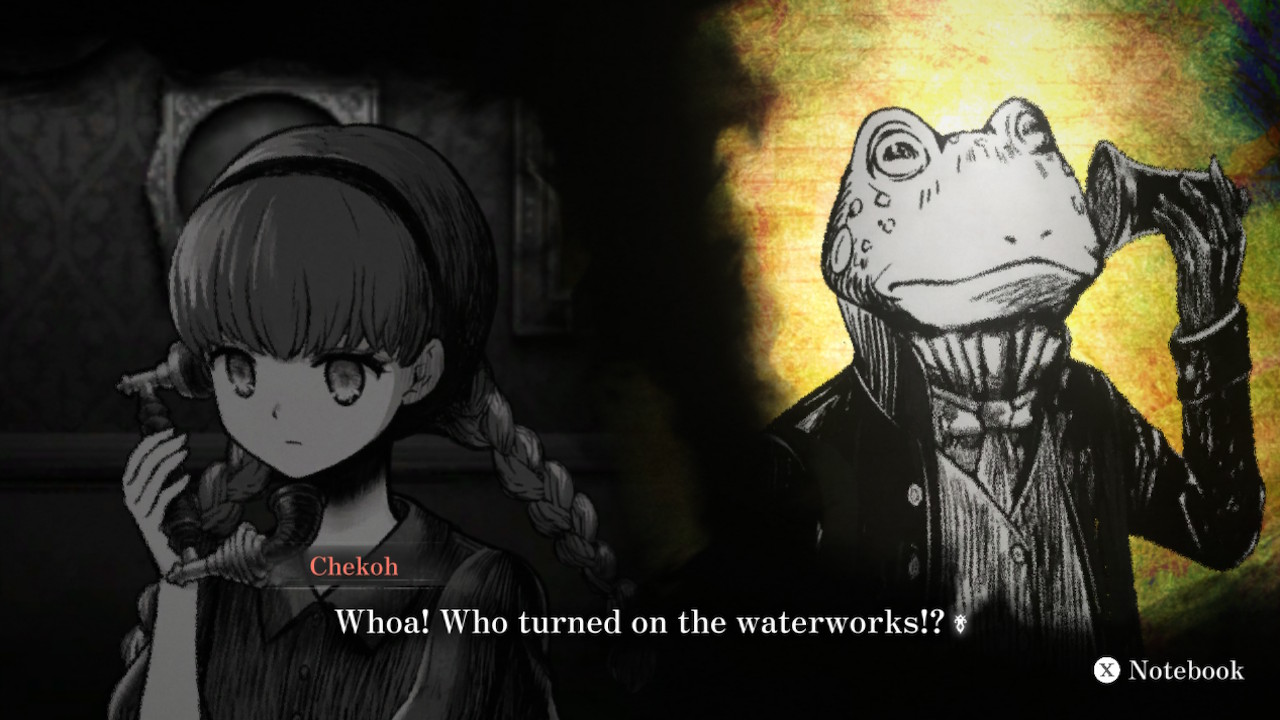
As for performance, this game played smoothly. There were two or three instances where the animated CGs or backgrounds got hung up for a second or two, but I don’t see it as a big deal considering the text revealed smoothly and the vast majority of the game was flawless.
As for the translation, it’s really well done here. I did notice one mistake, but that’s it.
To tie everything up in a pretty bow, I absolutely loved the sound and visuals of Schrodinger’s Call. The music here is just so lovely as it helps set the mood and really elevates every scene in the game. It makes a lot of sense why certain songs are tied to specific scenes or sequences. They not only feel like they were composed only for that specific situation, but also so you could feel how they want you to feel while you’re going through it. Like how important it is, how dire it is, or just how calming it is. It also does a great job in hitting home how you were building up to certain moments as the song that plays also crescendos. I also like how the music also plays into how defined or connected that character is to Mary. When the connection is fuzzy, the music takes on a distorted feel to it, but once they get defined and the connection is fully established their theme gets unveiled. I liked the various sound effects of the game, but I especially loved the sound effects that go along with speech. It gives an illusion of how their voice sounds, as every character’s voice sound effect is different, and it’s almost melodic in a way.
I loved all of the songs that played over the course of the game, like the song that plays when you’re defining the existence of your client, but I have a soft spot for Ayra’s theme. I think it’s because it gives the feeling of it being diegetic as Ayra sings to keep a grasp on her memories and her theme is a song with humming in the place of lyrics. I also love how Chekoh’s theme transforms to match Ayra’s theme when he’s ready to move on. And I can’t help but adore everything associated with Violet.
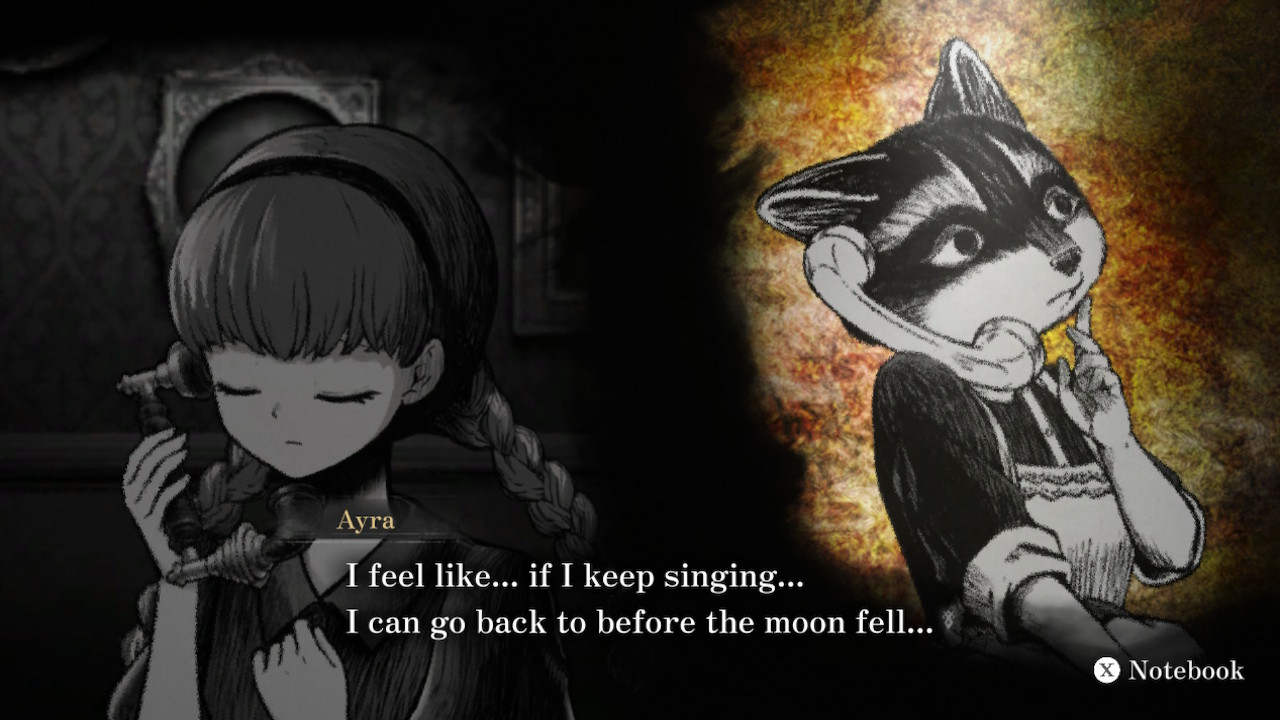
I loved the visuals here as well. The developers did a really good job in this aspect as the amount of different visuals that the game throws at you could have easily felt unnecessary or excessive, but it doesn’t here. It all feels like it was needed to properly convey the emotional narrative. No matter how abstract it may seem, it actually directly correlates with something whether it’s information you know, the general feeling of the scene, or how the characters feel. It even manages to incorporate what I’d like to say are real footage without it feeling out of place. And don’t worry, as there are proper CGs here which take on a more sketchy effect (which I really liked…and as you can guess ties into the greater narrative). I really like the backgrounds all the characters have, even though Mary’s is the more defined background where the others are more splotches of color (which does fit with the roles they play) and I really like the visual and sound effect that happens when you trigger a memory in them. Oh, and I loved the way that Mary filled out her notebook!
I especially really love the character sprites. All of the characters are so wonderfully designed and I think having everyone be represented by an animal was a brilliant idea. It wouldn’t have hit as much if we just saw blurred or scratched out faces (nor would scenes where this does happen be as impactful). The character sprites have a more refined drawing feel to them and I loved the various expressions and poses that they have, which helped convey their emotions. I also loved how all the characters had different styles of phones, which they didn’t need help to set them all apart anyway but it was a very nice detail nonetheless. Though, I think it was a missed opportunity for one of them to be on a wired phone with poses of them twirling their finger around the wire or having the wire wrapped around them.
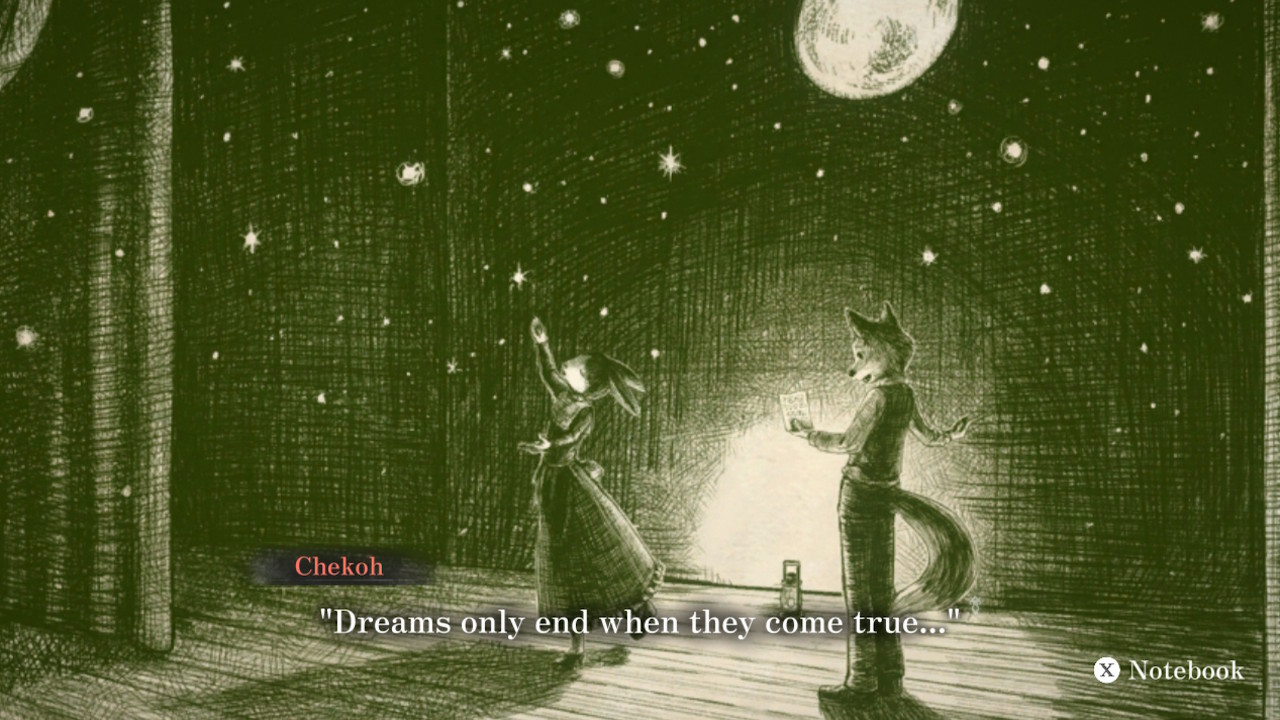
And just like with the music, you can tell how defined or the strength of the connection based on its visuals. All of the characters you talk to through the phone have a fuzzy animation effect to their lines, which is barely noticeable until they’re the main focus on a scene and is a brilliant way to convey them talking through the phone. Then when the connection wavers or when they’re not as defined, they get fuzzier and more out of focus. And how could I forget that they’re just a splattering of dots before they combine and form when you call them. Though, I do love how when they move on their sprite gets slowly overtaken by the light. And oh man, the visuals of the tail end of the game and especially the last scene of the game were so well done and beautiful.
I would be here all day gushing about the visuals if I don’t stop myself, so I will. I just hope I was able to convey how beautiful the visuals and music are here and how they were masterfully tied into the narrative.
Verdict
As you can probably tell, I ended up loving Schrodinger’s Call. I have to admit I just saw this as a good to great visual novel until I got to the finale where my thoughts jumped all the way up and I finally saw why this was being hailed as a masterpiece. Every aspect of the game not only ended up correlating with the thought experiment this game was inspired by, but everything ended up being more connected than you would think. While there were annoyances here and there, I absolutely loved the game’s visuals, the soundtrack, the way the game was written and how the game flowed, how the characters were written as flawed individuals that you could easily empathize with, and the way that the game builds up to the various reveals and twists here. I also absolutely adore the themes presented in the game and while the game can get pretty heavy, it can also be hopeful and joyful.
Schrodinger’s Call is such an emotional and impactful story that I’m so grateful I was able to experience. This is definitely a must play visual novel that no doubt will stick with you.





Recent Comments