Duck Detective: The Secret Salami Review
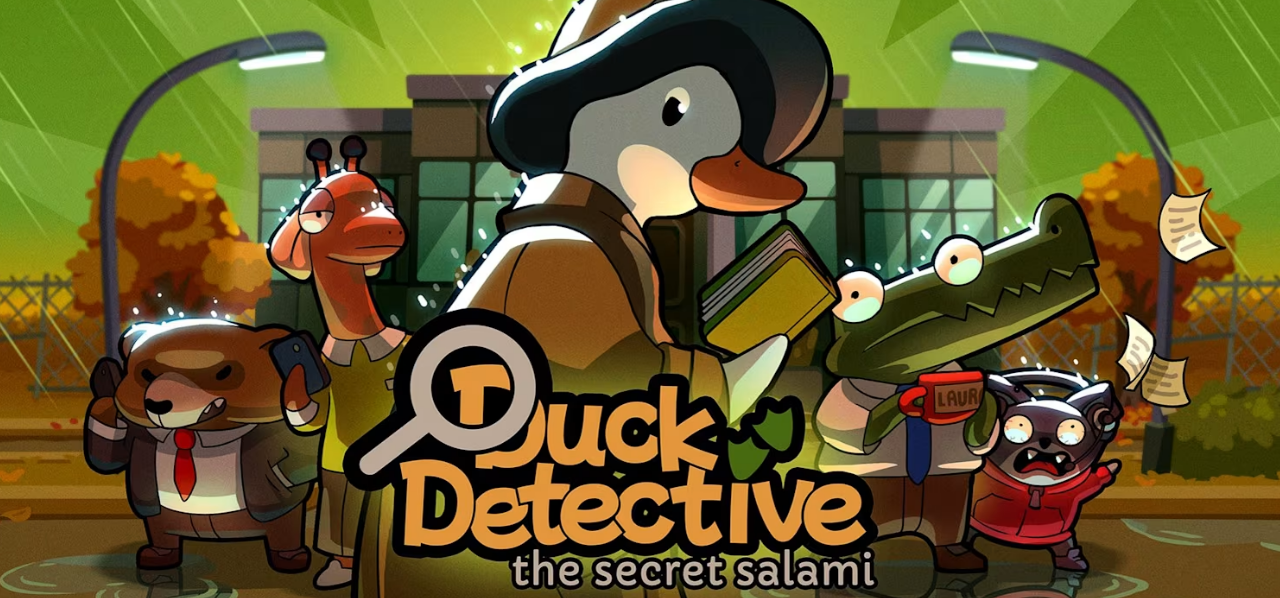
Duck Detective always finds the quackin’ perp!
Publisher: Happy Broccoli Games
If you don’t already know, I love detective games. Of course, it has to fall into my personal tastes, but when I find one that does my desire to play it skyrockets. It was the same way when I first learned about Duck Detective: The Secret Salami. The title is super cute, the artwork is super cute, and the premise sounded interesting. And luckily enough, there was a demo available which I, of course, immediately played. I actually got Duck Detective a week after its release, that being when I had the money to buy it, but just now had some free time to play it. So, did the full game live up to the demo?
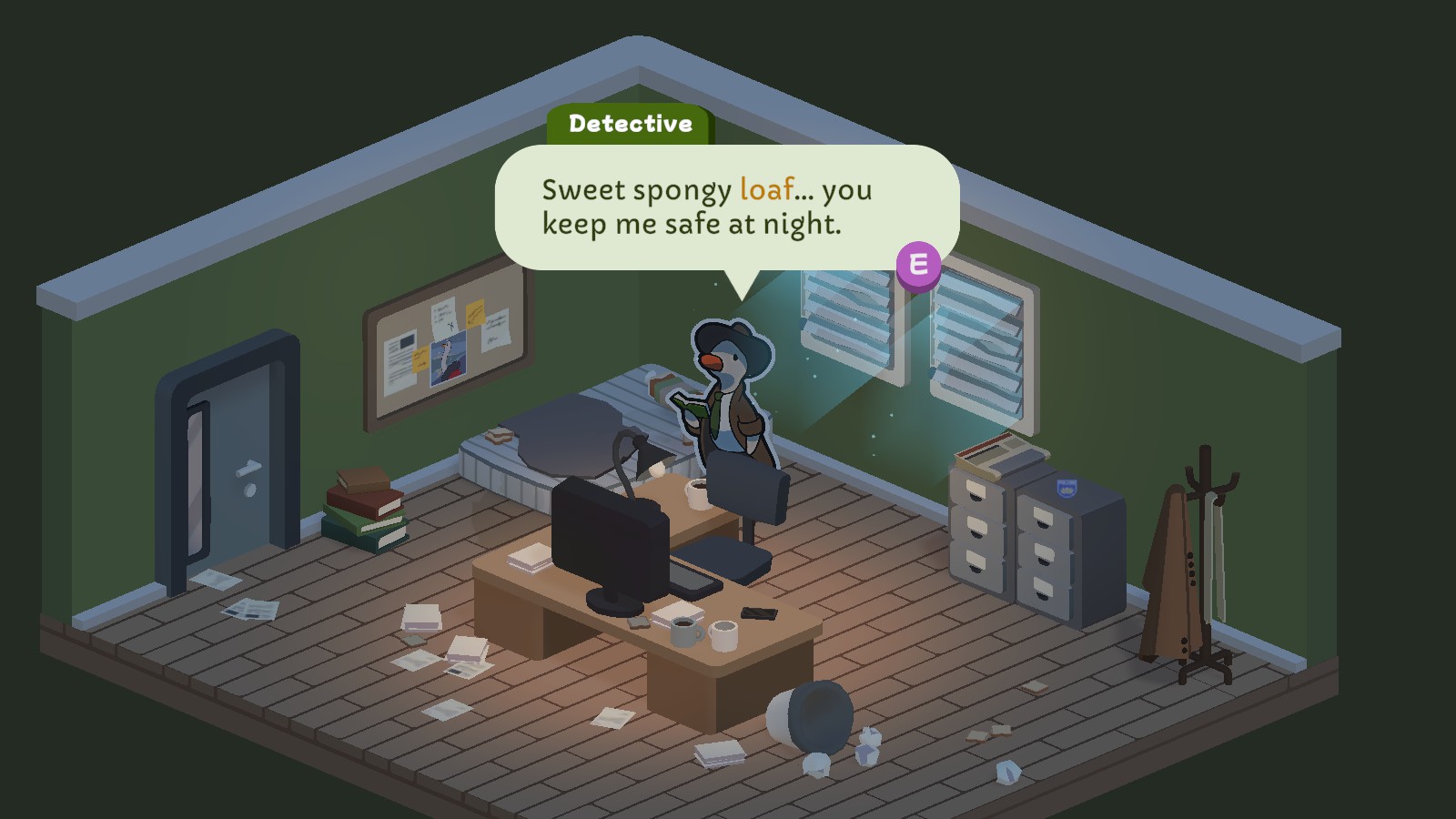
In Duck Detective: The Secret Salami, we play as, you guessed it, a duck who is also a detective. However, he’s a “down on his luck” duck as he’s freshly divorced, still in the addicting arms of bread, and struggling for money. After gathering himself after a particularly hard night, his phone rings. Our little Duck Detective, or Eugene McQuacklin, may have embarrassed himself when he picked up the phone, but he has a client and a new case to solve! The case? The mystery of who’s stealing your client’s lunch.
Yes, yes, it may seem like small beans, but those small beans pay the bills. And Duck Detective do need to pay those bills. This case takes Duck Detective to the BearBus office, which both acts as a depot for the buses to come back to after the bus driver’s shift ends, a base of operations for the company, and a call center for customers to call. After totally impressing the receptionist so he could get inside, this is where he learns that one of the employees have stolen another employee’s lunch. However, as he goes around deducing who’s who and investigating the office, it turns out that this case is bigger than it seemed. What started as an investigation on the stolen lunch leads to bigger crimes that were just festering under the surface.
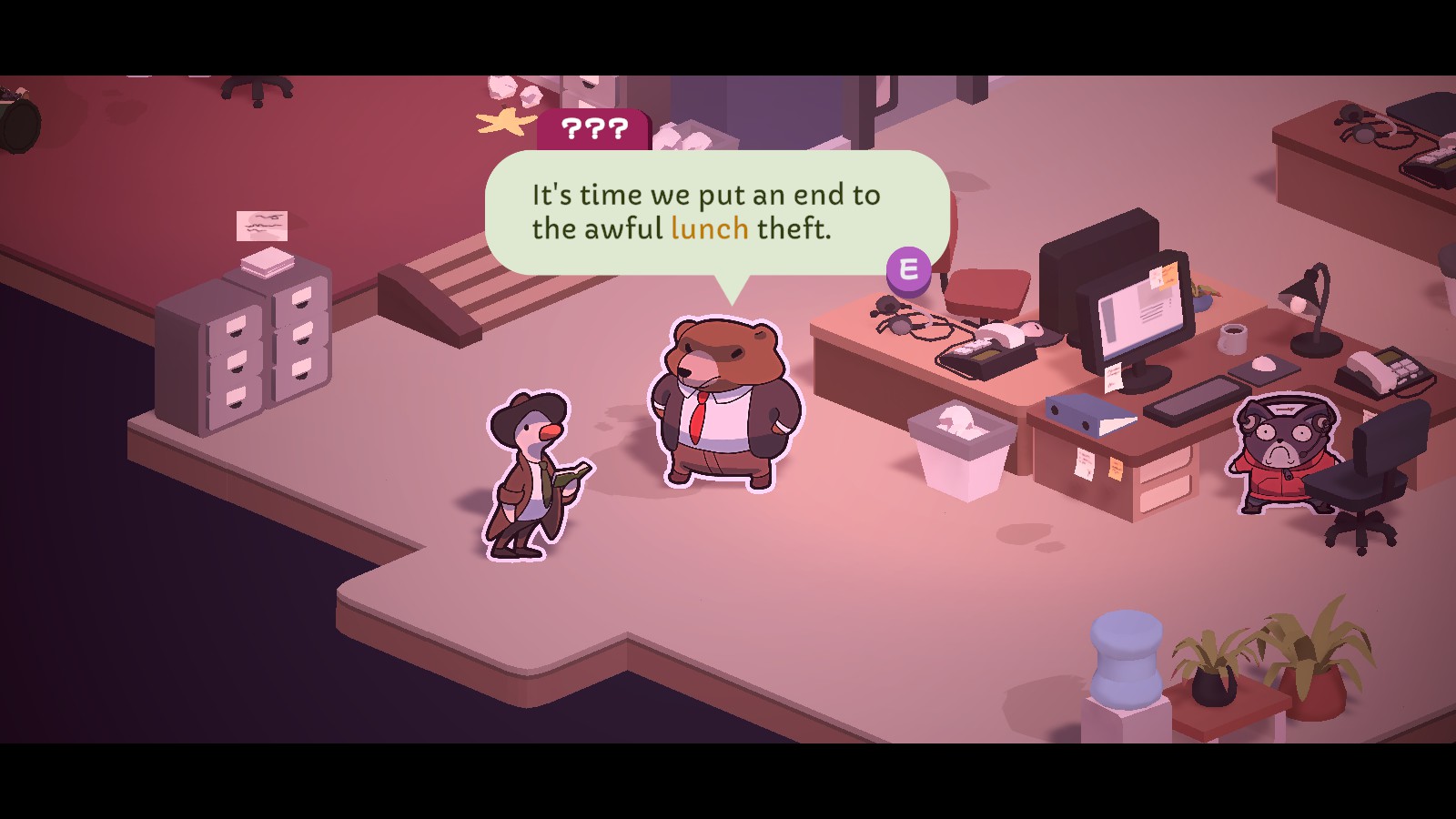
Overall, I did enjoy the story and was engaged throughout. I quite liked talking to all the different characters here and trying to figure things out with a cast that were really mainly focused on what they were doing rather than helping you investigate the case. You also do get a peak into the people’s lives, as you get to learn a bit about them and the day still continues despite you being there. I did also like how someone stealing a lunch was what uncovered everything else that was going on here. I honestly was not expecting the game to go into serious crimes with how lighthearted the game looks and is. Not to mention that I loved the writing style and humor.
However, I do think the lunch theft being tied to the bigger picture doesn’t really make sense when you think too much about it. I wouldn’t go into it because of spoilers, but the reasoning behind it seemed flimsy and the perpetrators would still be in hot water if they got the guy they were trying to frame fired. Getting the guy they were framing fired wouldn’t have solved their dilemma as it wouldn’t have stopped the person they were actually wanting to stop. Heck, arguably they were the reason they were caught as I’m pretty sure you never learn what was in the stolen lunch to make the “Salami Bandit” alias that is put on the note the thief leaves behind make sense only in context of the stolen lunch case. I feel like the lunch theft should have been unrelated to the bigger picture and you just so happened to stumble upon the two other, bigger, cases.
Also, I feel like Freddy should have been the one to call the Duck Detective.
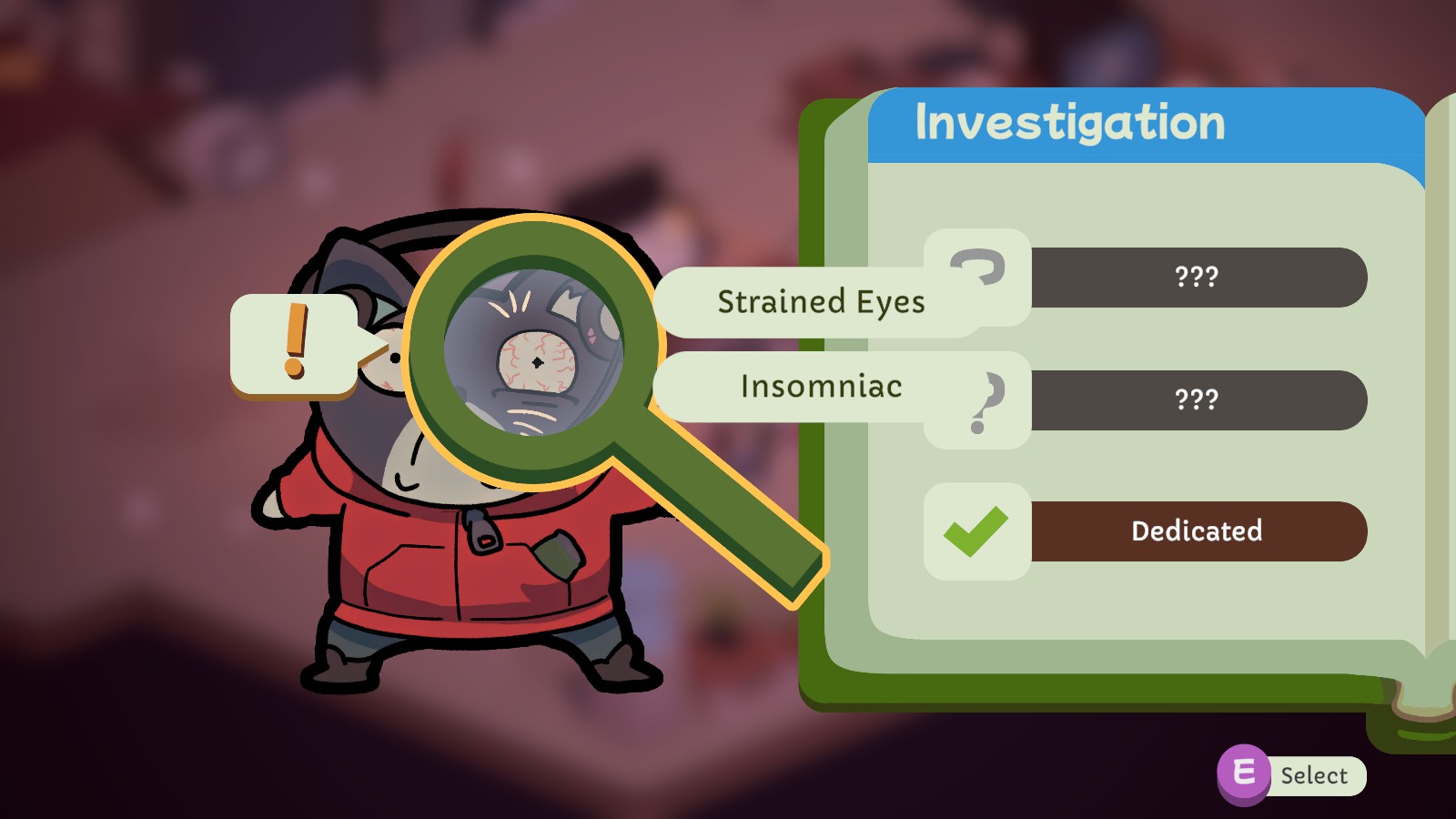
Gameplay here is pretty simple. Aside from Duck Detective’s apartment in the prologue, you’ll be able to roam around the BearBus office to investigate the case. You’ll mainly have free run, you do need to unlock areas, and any interactable spots have dots above them to indicate that. If it’s something in the environment or an item, you’ll either have Duck Detective comment on it or have it be something he inspects as it’s something he needs to look closer at. For characters, Duck Detective will be able to talk to them, question them on specific pieces of evidence or about someone else, and inspect them. When you go into inspect something or someone closer, it’ll appear on the left with the Duck Detective’s journal on the right showing you how many clues you need to find. Here, your cursor turns into a magnifying glass where you’ll get to see the more detailed version of the object or person through it and, if it’s a clue, you’ll get a keyword out of it. You’ll also get keywords through overhearing conversations and through conversations you have with the characters.
So, what are the keywords words for? They’re used for deductions, or deducktions as this Duck Detective calls them, for the various questions Duck Detective has throughout the investigation. Like whom the suspects are and what their job is. Deducktions are basically the progression gates that you need to solve to be able to progress. Each deducktion, which you’ll do in Duck Detective’s journal, consists of a statement with blanks you need to fill. These blanks in the sentence(s) need to be filled with the correct keyword and you can actually see the related keywords and if you found all of them. You need to find all of them. Trust me, there were two deducktions I thought you didn’t need to, but you did as it needed the keyword I didn’t yet have. All you have to do is choose the correct keyword for each blank space and it’ll tell you if you got it right or about how many blanks you got wrong. You get just enough of the statement to get what it should say, though there were a few that were a bit intimidating.
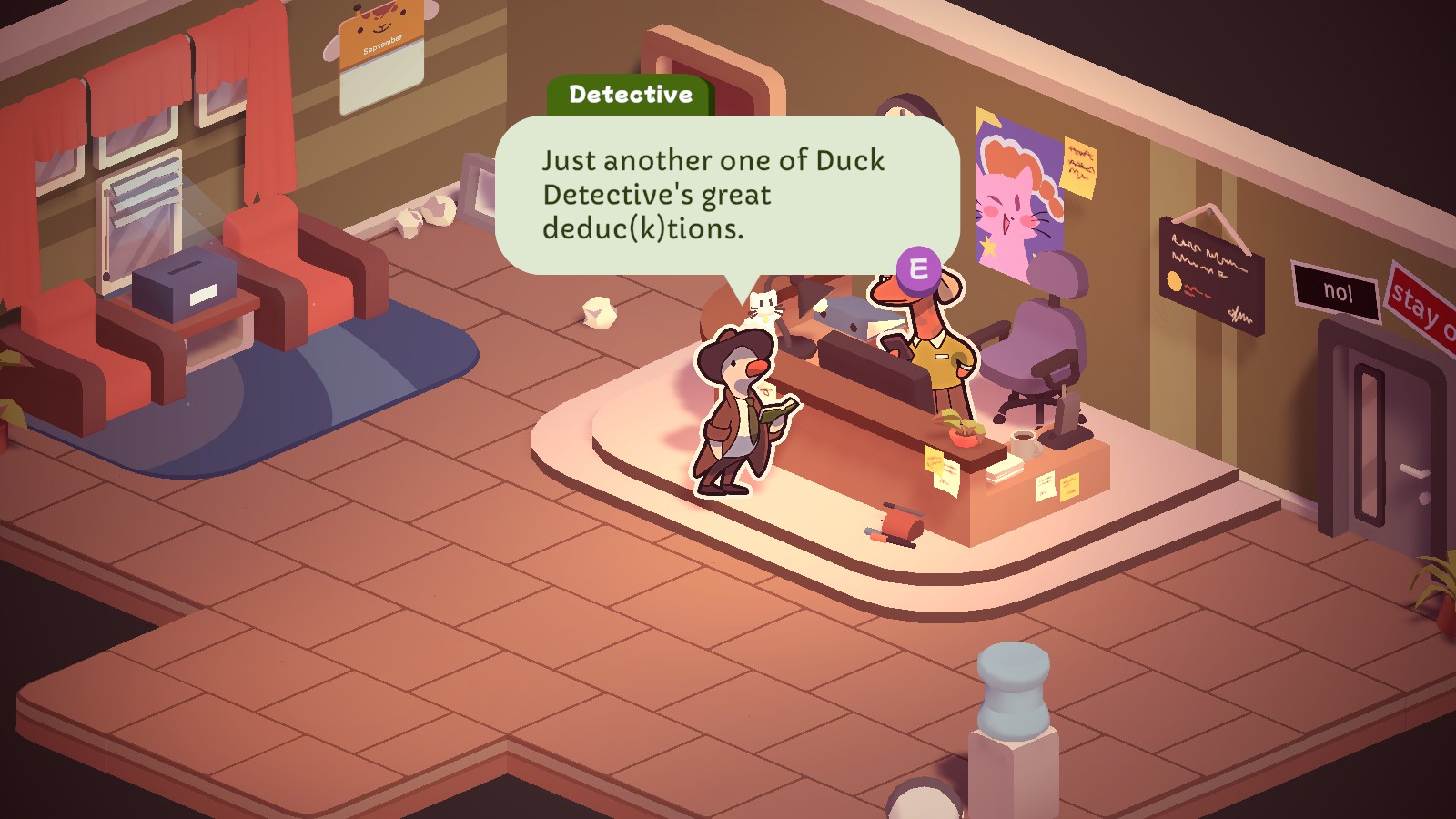
However, contrary to what you’d expect, some deducktions are actually hard. There are even some puzzles, which one of them turned out to be hard. This is due to the game asking you to pay attention to the details you see when inspecting things (or people) that the game doesn’t bring attention to. This is due to inspection only bringing attention to aspects that’ll give you keywords for deducktions rather than clues that pertain to what you’re looking for at the moment or suspicious clues that’ll come into play later. Once I did realize that the game was doing this, I did like it as it did bring in some more difficulty, has you be more attentive, and there are some clever connections you can make; but it does cause confusion as the deducktions don’t make sense if you don’t realize it. Due to coming across the clues before the deducktion comes around, it can seem like there’s no way you’ll be able to know that, or make it seem like a stretch, since you did get the clues for it before it was relevant. Don’t get me wrong, there are deducktions that are still a stretch, but most of them actually aren’t as the clues are technically in the background since the focus is finding keywords.
Aside from it being where you make deducktions, the journal is also where you’ll: be able to see the list of suspects with their keywords (which you got by inspecting them and also define them); your inventory which is mainly where you’ll be able to look at objects you already examined without having to go back to where it’s located at; and look at the map which also tells you if there’s something or someone you haven’t interacted with yet. Like, there were a couple items that I didn’t even notice until I went back to take a closer look after looking at the map and noticing there was a marker there. Just make sure you know the location it is (embarrassingly, I was looking for something I missed in the office when the marker was actually in reception).
There’s also a hint system if you need help. I only used this a couple times, but it’s framed as the Duck Detective pondering on the case and you’ll be able to get a hint for the specific spot you’re stuck on. There’s also a Story Mode setting which tells you which keywords are in the right blanks for deducktions. Personally, I only got seriously stuck on one puzzle and, to be fair, it seemed like a lot of people got stuck and misinterpreted the clue for it too.

Sadly, Duck Detective does have some negatives. Like I mentioned before, there are some story beats that didn’t much sense or were a stretch. While you uncover two big, serious, crimes you only do a big reveal for one of them and get the option to arrest the perpetrator(s) for one of the cases while the other perpetrators of the other were let go because Duck Detective seen it as not related to his original case. No. Give me the option to arrest them too. Their crime is just as bad, if not worse considering what you learn. Aside from that, there were some dialogue that you couldn’t hear again that was important for a deducktion. Some people may also not like how elements that weren’t directly pointed out was important for deductions, as inspecting things were mainly to get keywords rather than pointing out important clues or suspicious details. This can cause some expecting a cute, easy detective game to be confused and brute forcing their way through deducktions. Some deducktions were a bit of a stretch even when you pay attention to what the game doesn’t directly point out. Like what was happening in the kitchen could have used an environmental clue as the clues there (one of which is dialogue you can’t hear again) don’t definitely point to the answer. Lastly, there were some inspection clues that were too small and caused me to have a hard time finding it. Like the two or three instances where you have to find a sparkle spot that indicated how well something was being taken care of.
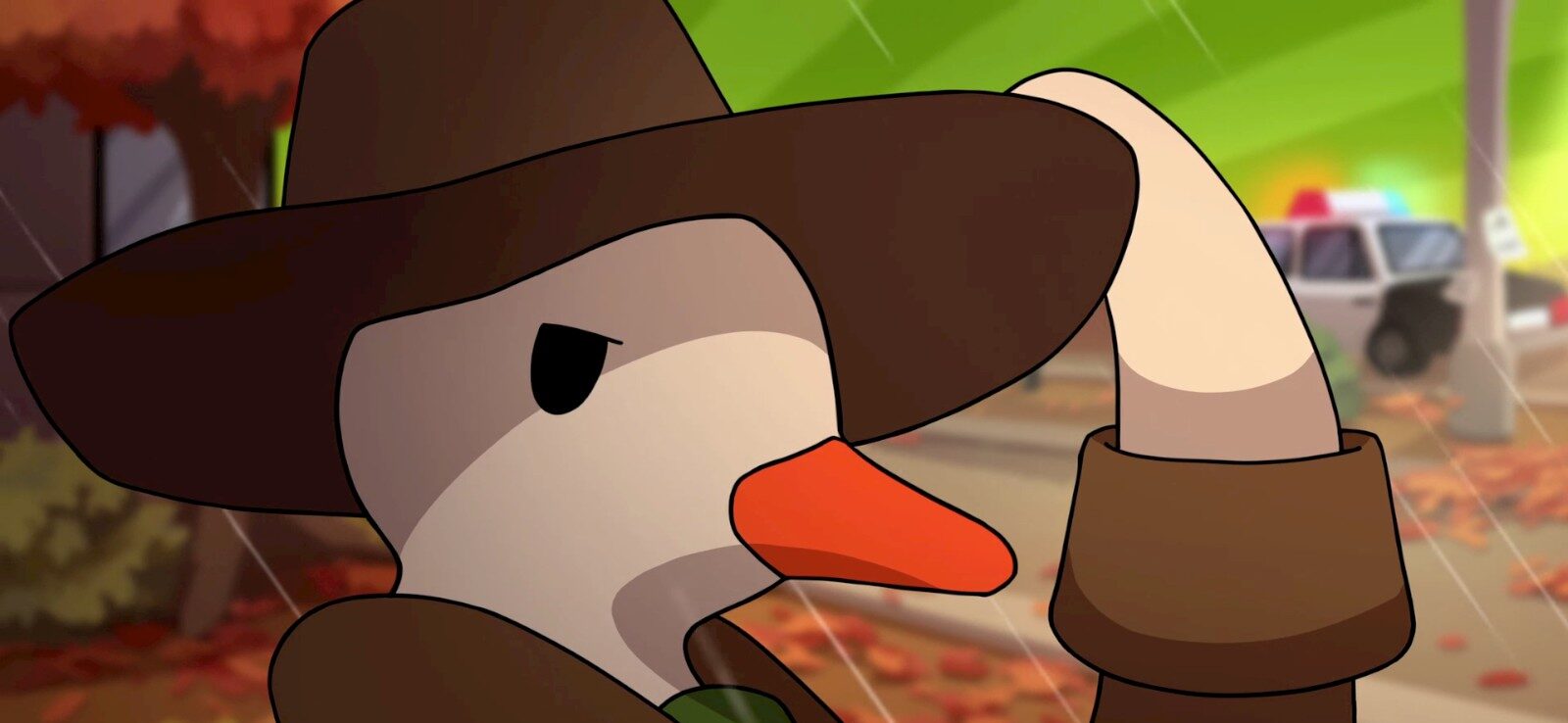
I absolutely loved Duck Detective’s art style and the voice acting. Everyone here looks so cute and the environments themselves were well done. I think it was a great idea to have the characters be like paper cut-outs, since it dodged the possibility of their 3D designs not looking as cute as their 2D designs. I also really liked how you get their basic design when you’re looking at them, or other objects, normally; but when you go in with the magnifying glass you get to see a more detailed version. On voice acting, they were all great. There really was only one character that got on my nerves, but she only gets like four lines. Everyone played their character well and helped bring them to life even more. I especially loved Duck Detective’s voice acting, as he has a gruff, noir-esque, voice that delightfully clashes with his cute design. I can’t say I was surprised by it now, but back when I played the demo I was pleasantly surprised.
Also, there’s a button to have Duck Detective quack. I accidentally discovered it and I love it.
Verdict
Overall, I really liked Duck Detective: The Secret Salami. I didn’t love it as much as I thought I would, but I still really liked it and I do think it’s worth the price point. There are some aspects of the story that doesn’t make sense, was a bit of a stretch, or wished it was included; but it has really cute graphics, good voice acting, good detective mechanics, surprisingly harder than you’d expect based on how it looks and the tutorial deductions are, and a story that’ll keep you interested until the end.
Also, I really hope we get more Duck Detective games, like how Frog Detective is a trilogy, or get a longer game where there’s a handful of cases you’ll do with a storyline running through it (similar to Ace Attorney).




Recent Comments