Dosa Divas Review (PS5)
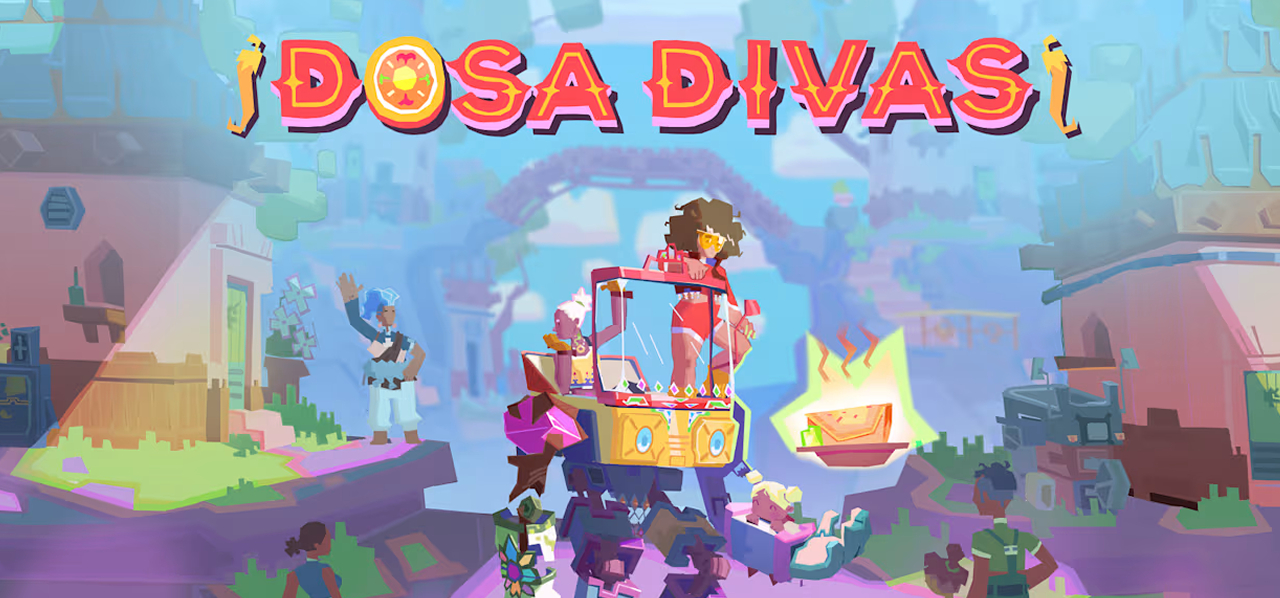
Can I have one of everything? It all looks so good.
Publisher: Outerloop Games
When I first saw the trailer for Dosa Divas during one of the gaming showcases I knew I would like it. A turn based RPG with cooking and it looks great? Sign me up. That and it did remind me of another game called Thirsty Suitors (which I liked and did write a review for, but haven’t posted yet) purely based on how the characters were animated. It wasn’t until the game’s release was a month away that I finally decided to look closer on the Steam page and discovered they were the same studio. No wonder Dosa Divas reminded me of Thirsty Suitors! I was sure I would enjoy Dosa Divas after discovering that little fun fact and here I am ready to talk about the game. Did Dosa Divas hit my sweet spot? Let’s get into it!
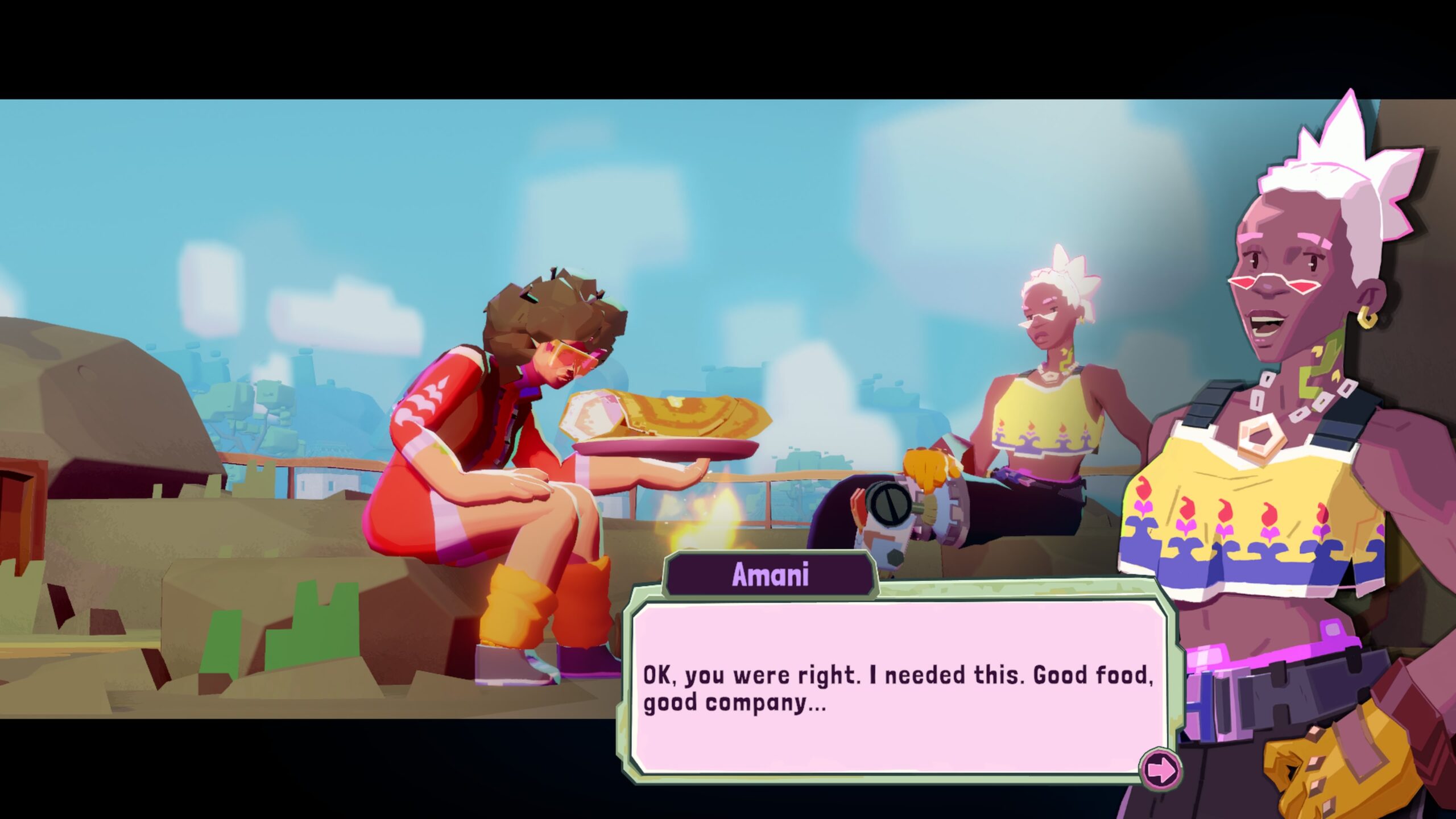
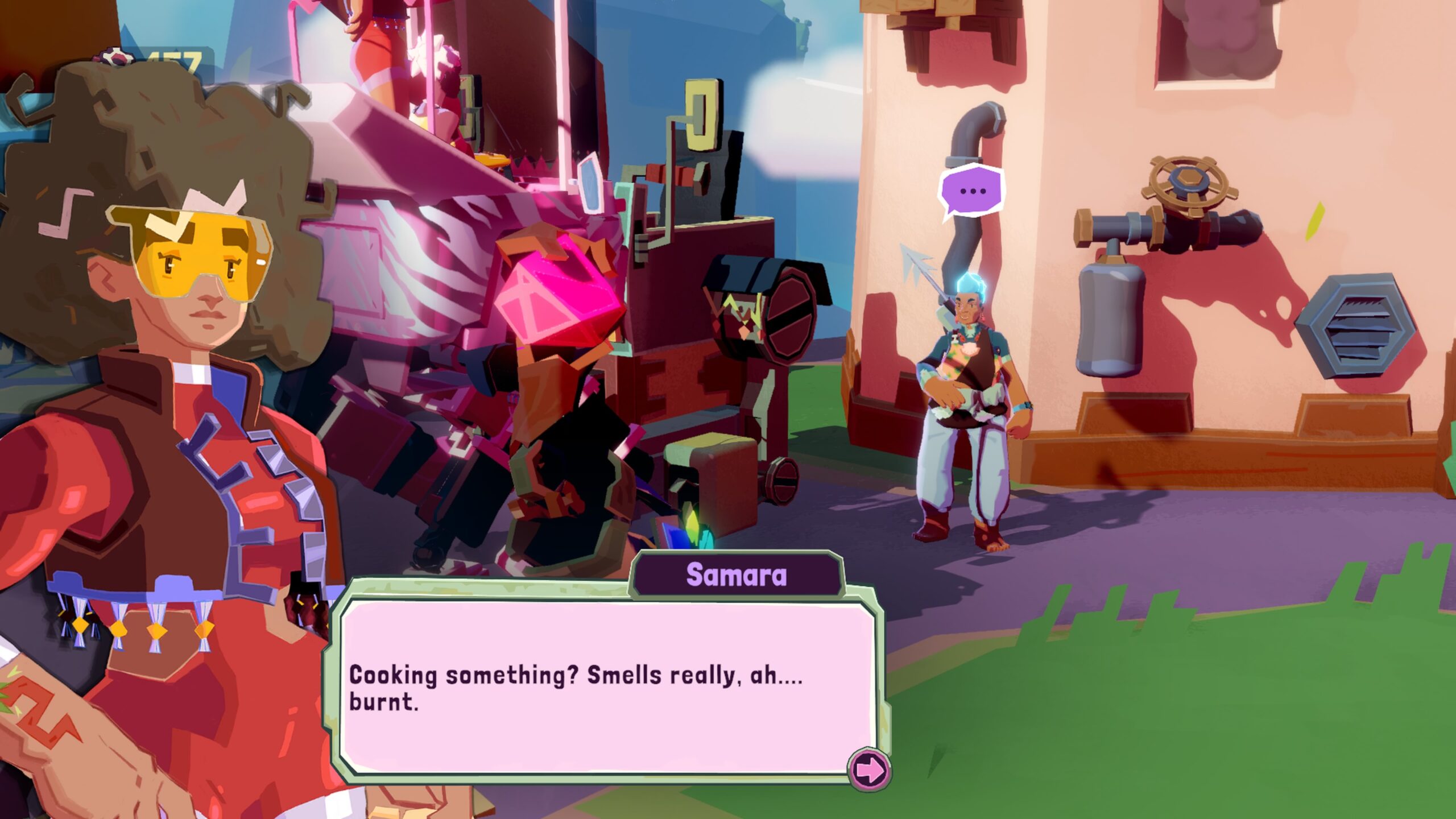
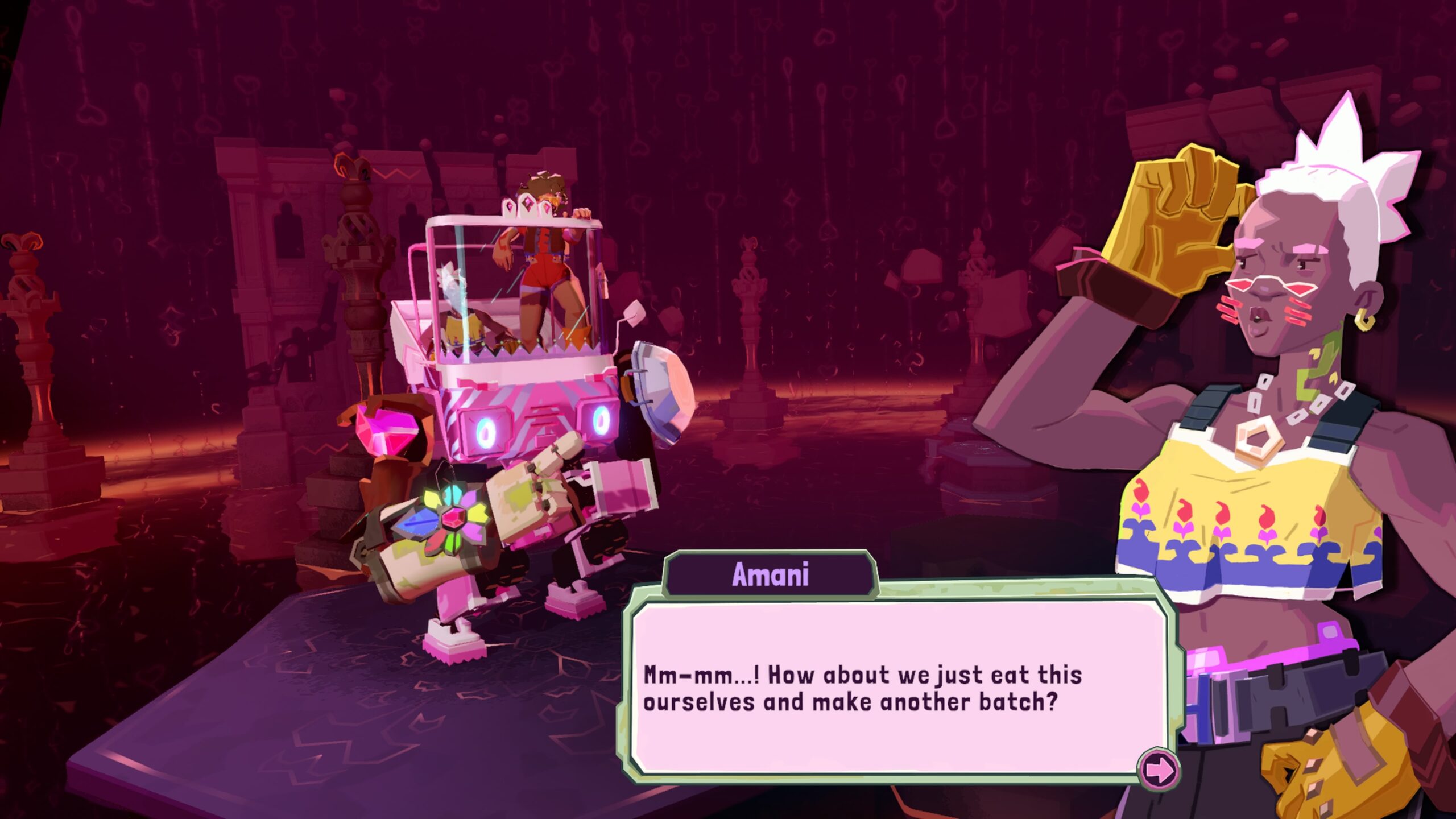
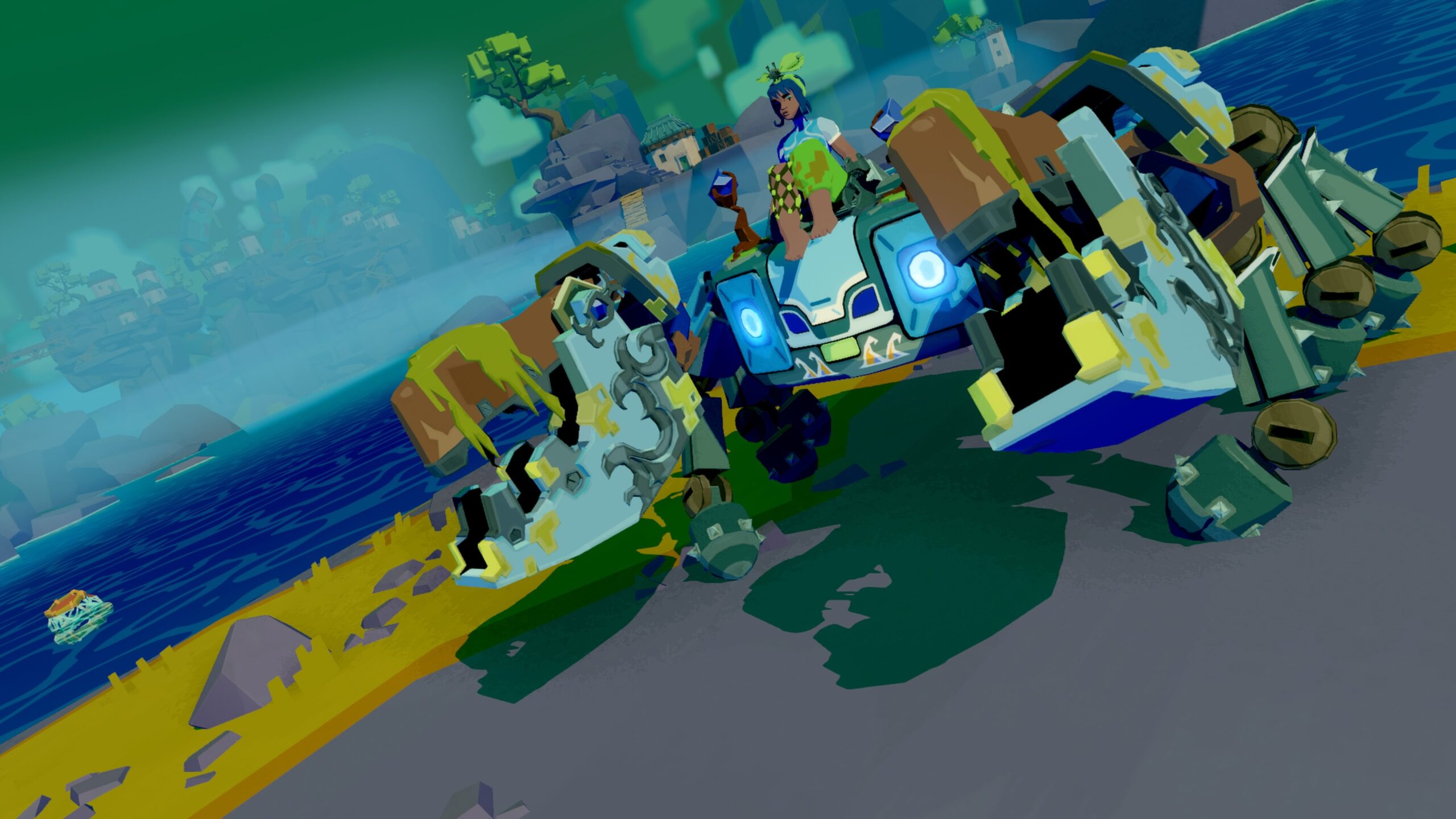
Dosa Divas throws you right into the frying pan as we follow two sisters, Samara and Amani, somewhere at the start of their little roadtrip through Meyndish Isle riding their ancient spirit mech (aka DiVAs) they call Goddess. We come right in somewhere during the beginning, not quite at the start but also right before all the action, as they stop to take a break. After Amani smells some fresh ingredients growing in the area, Samara suggests and manages to convince Amani to cook a dish together. After Samara gathers everything, they both make their signature dish: dosa! Even Goddess joins in to help as she basically is a food truck. However, as they’re sitting down to eat and talking, their other sister makes an appearance. Well, not really but technically in a sense she is. Their other sister, Lina, makes an appearance through one of her many floating billboard ads that you’ll see scattered around throughout Meyndish Isle. Most of the time they’re spouting the various ads and variations of those ads based on what they hear people say, but Lina can actually talk through them if she wants to. It turns out that Lina has built her own fast food empire over the decade called LinaWorks which is so successful that she’s taking over the island. The fast food here isn’t what you’d imagine as she’s selling food paste in tubes that she calls LinaMeals. “Oh she’s just selling fast food, what’s the harm in that?” I hear you asking and I say, she also aimed to eradicate cooking altogether. And crazy enough, she was succeeding as Amani finds out that people don’t just not cook anymore, but they can’t and they don’t remember how. Heck, it’s been so long they forgot the taste of real food.
Anyway, Lina doesn’t take Amani’s return positively nor Samara showing her face to…er…her billboard. Thinking they’re there to try and take what she built away from her, she tells them to just go back into hiding. Why is Lina so hostile? Well, you see, there is a lot of history that these characters have which you’ll learn about as you progress through the game. You quickly learn that Amani has actually been gone for 10 years. She just disappeared one day and went radio silent. Well, to everyone’s surprise, she suddenly decides to come back. Amani keeps the reason why she came back a secret, but we know she has something she needs to say and she wants her whole family to get together for dinner so she can just tell everyone all at once. You also learn that their family actually owned (or I guess owns since LinaWorks technically evolved from it) and ran their own restaurant. Their parents ran it while they were growing up and when they decided to “retire” they passed it down to the three sisters. Renaming the restaurant Dosa Divas, after their signature dish and the mysterious mechs they discovered underneath it, Amani and Samara handles the food side of the restaurant while Lina handles the business side. Amani and Samara were also basically free-spirited idea guys while Lina was the one forced to take up a bad guy role as she knew they were bleeding money and tried to reign in her sisters. As you can guess, Amani and Samara clashed with Lina a lot. Until an event I like to call The Accident which was the tipping point that caused Amani to leave and disappear, Samara to abandon the restaurant and hide away somewhere, and Lina to be left alone to figure out what to do. Which led Lina to create LinaWorks and set out to eradicate cooking.
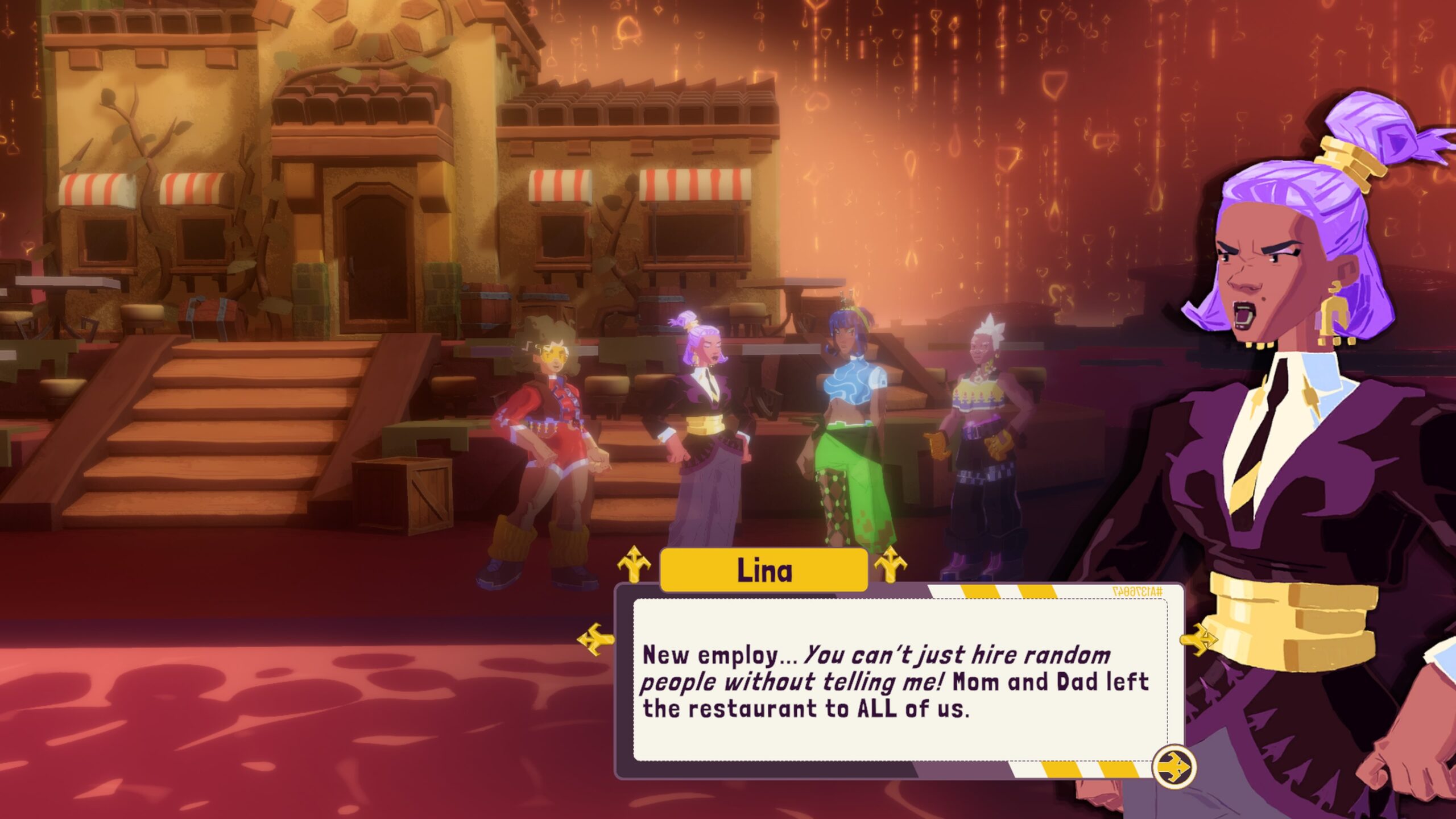
Despite the lukewarm welcome from Lina, Samara and Amani still continue on their roadtrip to their parents’ place. However, what should have been a simple trip turns out to be way more complicated as they run into familiar faces, meet new faces, and get face to face with Lina’s Goons who don’t hesitate to attack the sisters when they feel provoked. The villages that they pass through also are dealing with problems due to LinaWorks and their community being a bit fractured, which Samara and Amani step in to help with the power of cooking (and cooking utensils). Not to mention that some of those familiar faces were employees of the restaurant and were also a part of The Accident. Who aren’t exactly on good terms with Amani or Samara.
As you progress throughout the game, you’ll see the mystery of what happened and everyone’s connected history unravel, discover why the characters act the way they do, rebuild the sisters’ reputation with the villages they visit, help out those suffering under LinaWorks, beat up some goons, cook food, serve and eat up some delicious dishes, get a peak into what’s going on with the DiVAs, and hopefully see Samara and Amani not only reconcile with Lina and their parents, but also their friends that were affected
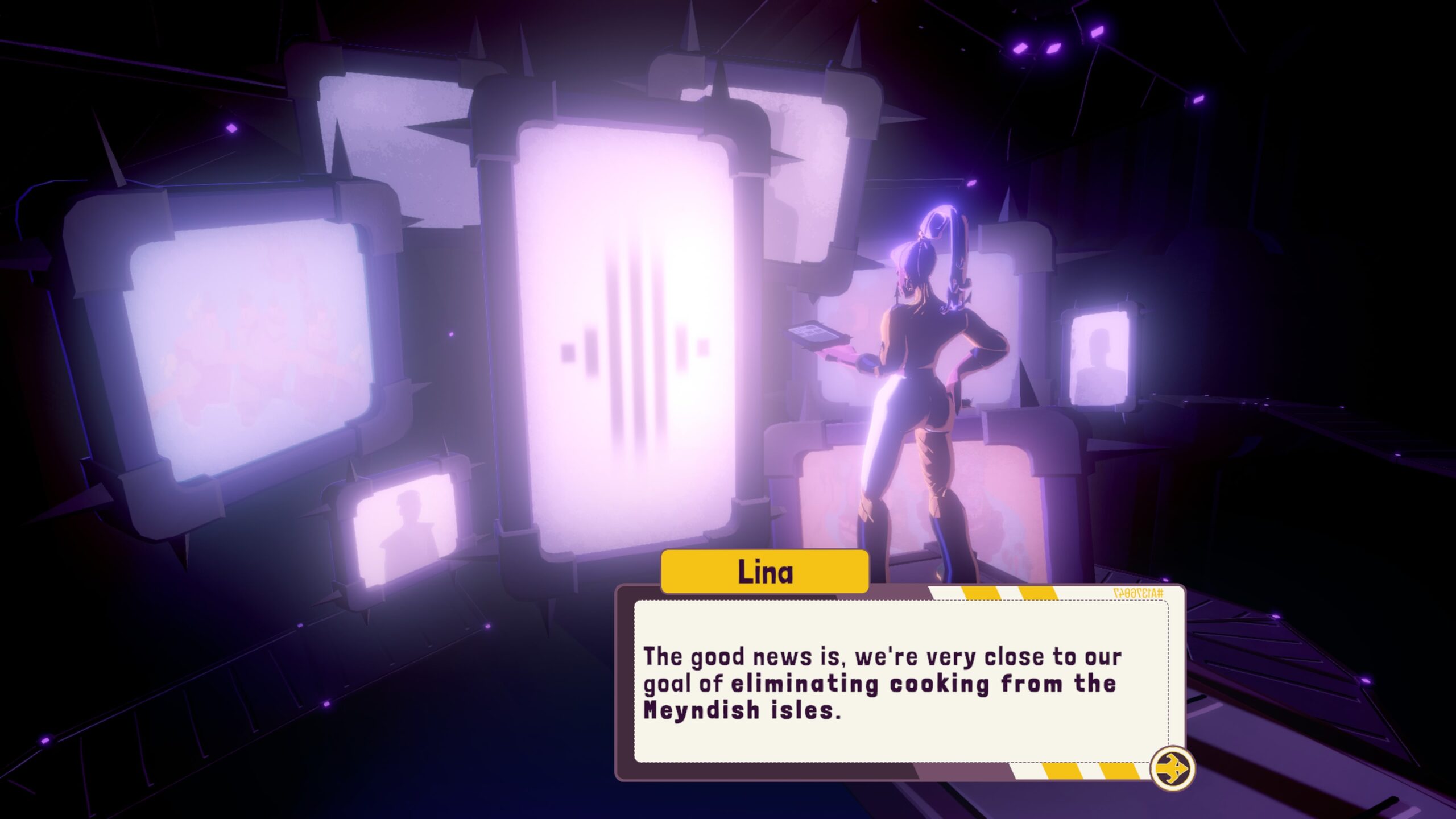
I really enjoyed the story of Dosa Divas. It honestly gave me a chill roadtrip vibe to me. Well aside from the whole cooking is being eradicated, being attacked, and Amani’s secret of course. I really liked all of the characters (except first half Kabi, he creeped me out how he made everything into innuendos and tried to sleep with both sisters), the journey that Samara and Amani go on, discovering how Meyndish Isle was like after years of not cooking (it really hurt how there’s a kid that knows nothing but the food tubes which is scarily accurate), and how the whole game was about trying to reconcile with your family with a dash of helping reconnect communities through the use of cooking. There is also a parallel story going on with the DiVAs which I wasn’t expecting, but was pretty nice and I feel was to show how things could have gone. Oh, and while I’m here, I loved how all the DiVAs ended up fitting really well with the characters they bonded with. Goddess is basically a food truck, which fits Samara and Amani both being cooks and co-owners of their family restaurant and how it’s teamwork. Though, I think my favorite in terms of how they tie into their bonded character(s) is the camel DiVA. I don’t want to spoil it, but it’s so good how it shows off how the characters were like years ago.
Anyway, I really love the way that the story was written and you can tell a lot of care was put into the narrative. I was a bit worried during the first half of the game, as Samara takes a “it’s been 10 years they need to get over it” stance, but I had nothing to worry about as it didn’t go in that direction. It was more to show you how Samara took The Accident and she does strive to be better and apologize for the wrongs that she’s done alongside Amani. The main thing that I honestly loved about this game’s narrative is that it doesn’t paint any character as totally in the right or totally in the wrong. It may seem like it, but things get more nuanced as you progress and see more of what happened. All the characters were in the right and in the wrong at some point, whether that’s in the past or the present, and the actions that they took or are taking is justifiable. You know right away that these characters are not only acting based on the way they were raised, but also what happened 10 years ago and what that 10 year gap of silence did. I honestly don’t blame any of the characters for the path they went down. Lina, in particular, makes a whole lot of sense once you know everything. Granted, they still did some heinous things, but their journey to making those decisions makes sense. Hopefully what I’m trying to say is getting through and it doesn’t seem like I’m defending their actions haha. I’m also glad that the game ends with a hopeful tone. All the characters actually got to talk and while their relationships won’t be the same as before, they did reconcile and it’s heavily suggested that they kept working on rebuilding their relationships and being better. I’d at least like to think that they did.
Oh, and I just have to say the second half of the game is so good and the last chapter is amazing. The ending too is one of the ones that just sneaks up on you and I personally found myself tearing up when the credits started rolling. The game has some emotional moments, which of course the ending has one of them, but I do think the story hit harder for me due to my family having a similar situation happen. It wasn’t exactly the same of course and I’m not really going to go into it (half because it’s private and half because it’s between my mom and her siblings), but there were enough similarities that it really connected with me and made me reflect on what happened in my family.
I will say the beginning of the game is the weakest, as you’re going in knowing nothing and it does feel like you missed the prologue, but it does get better. It very much is the kind of story that takes time to build up and once it does it delivers. And on that, I do want to mention that the writing does a good job in that regard. I never felt like I was just being thrown things that I was expected to already know, but more like the game was approaching it like a mystery for the player You don’t know what happened in the past, but that slowly gets revealed as you progress through the game. And the order you learn things was well done too. Plus, it also helps that Amani is also clueless on what happened during the 10 years she disappeared so while she does have memories of how it was in the past, she doesn’t know what happened in that gap when she was gone. Which gives Samara a good, natural, reason to chime in. It was also enough to get me hooked as I wanted to learn more about the shared past that the characters have and to hear the big news that Amani had.
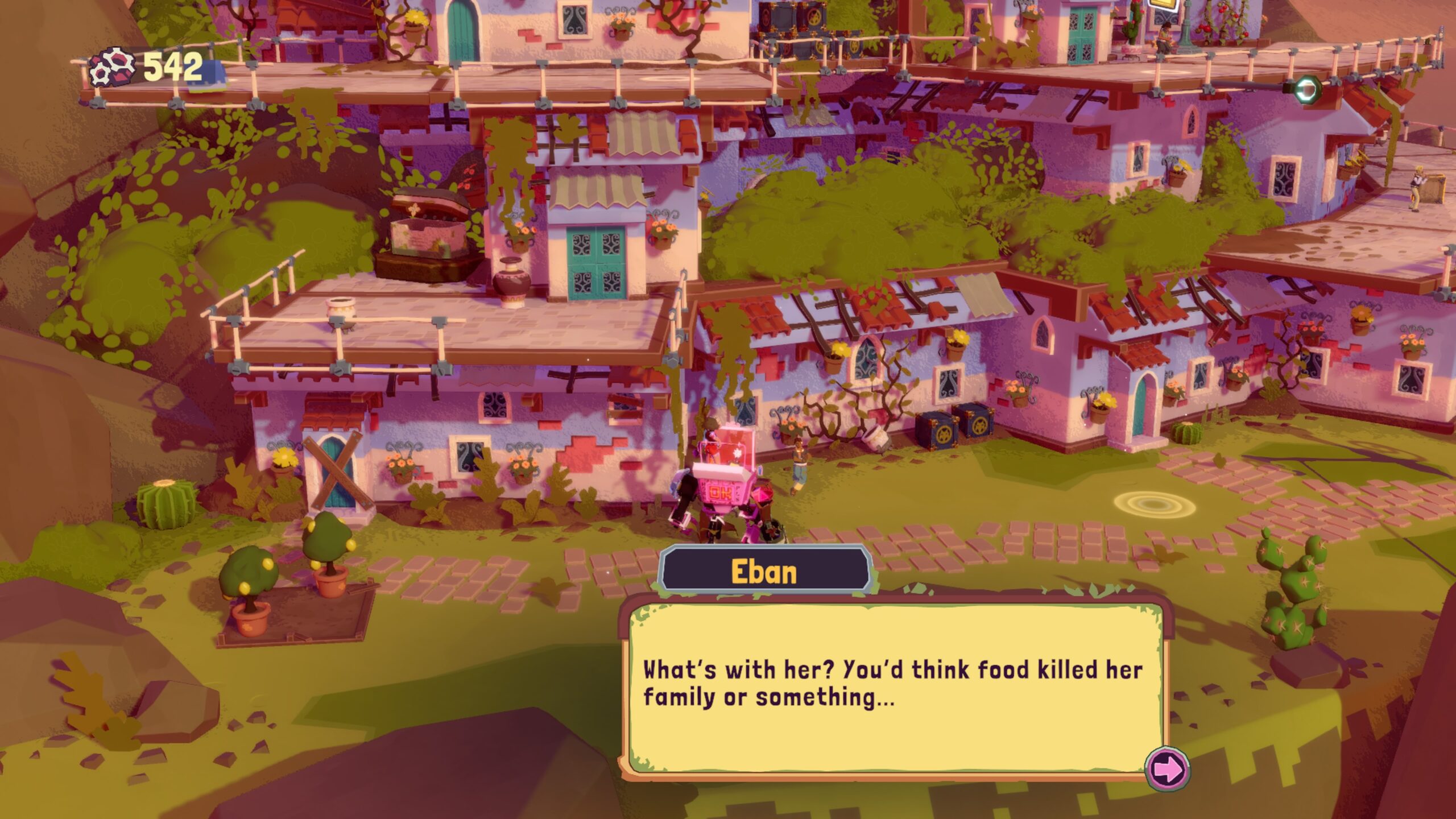
Other than that, I’d say my other story complaints are that there are some things that don’t get answered. I’m fine with the DiVAs staying mysterious, but you never find out where Amani disappeared off to. Which seems like it’s not a big deal until you learn one certain detail that makes you wonder how she didn’t know what Lina was doing. I was also curious about what Samara was doing during the 10 year gap. I was surprised how there weren’t some lines after the cooking taste test where they were catching up on what they did. Arno’s arc also felt a bit unfinished as it seemed like it was building up to learning what happened in his past that made him feel the way he does and it never did. It was also a bit weird how the tidbits you learn about him outside of memories during his time at the family restaurant are kind of floating around and you just have to assume it’s Arno they’re talking about as I don’t believe it confirms it. I did also find it a bit weird how there are points where the game is clearly talking about death, but the dialogue just beats around the bush to avoid the word (and variations of the word). Which makes it weirder since there are moments where the game outright says it. The only reason I can think of is to characterize the characters or to make the big reveal more impactful; but honestly all it did was confuse me (it honestly took me a while to realize a side character died cause I thought they meant he was forced to go back to work). Also the big reveal was already impactful and shocking enough.
As for the writing style, I really liked it. I liked how the dialogue was written, I appreciate that the dialogue choices match what’s said and the tone Samara takes (she gets most of the dialogue choices here) matches what you’d expect, and the jokes were a hit with me. I also felt the writing was pretty natural here, everything was paced well, and I like the way things are foreshadowed and revealed.
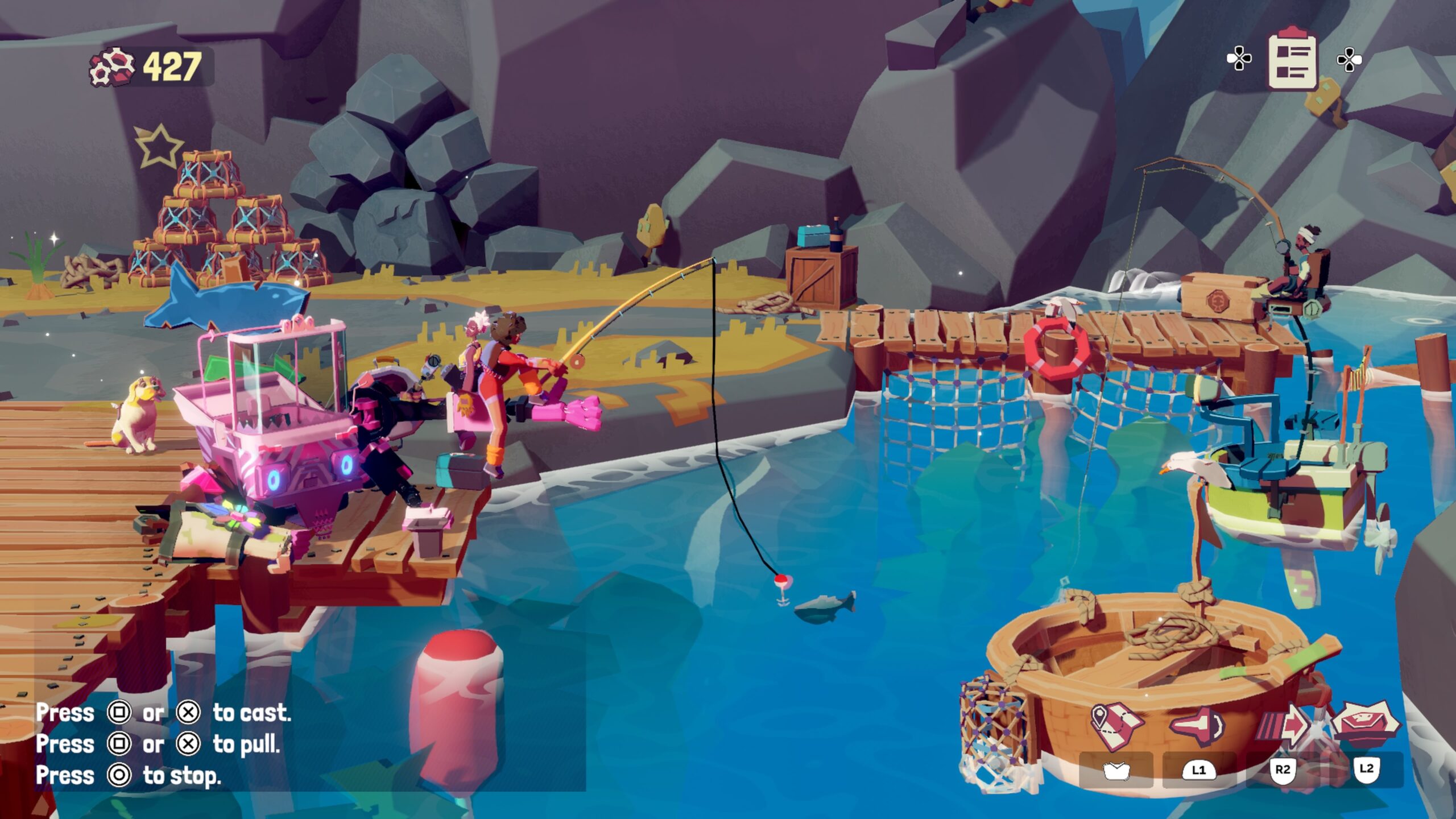
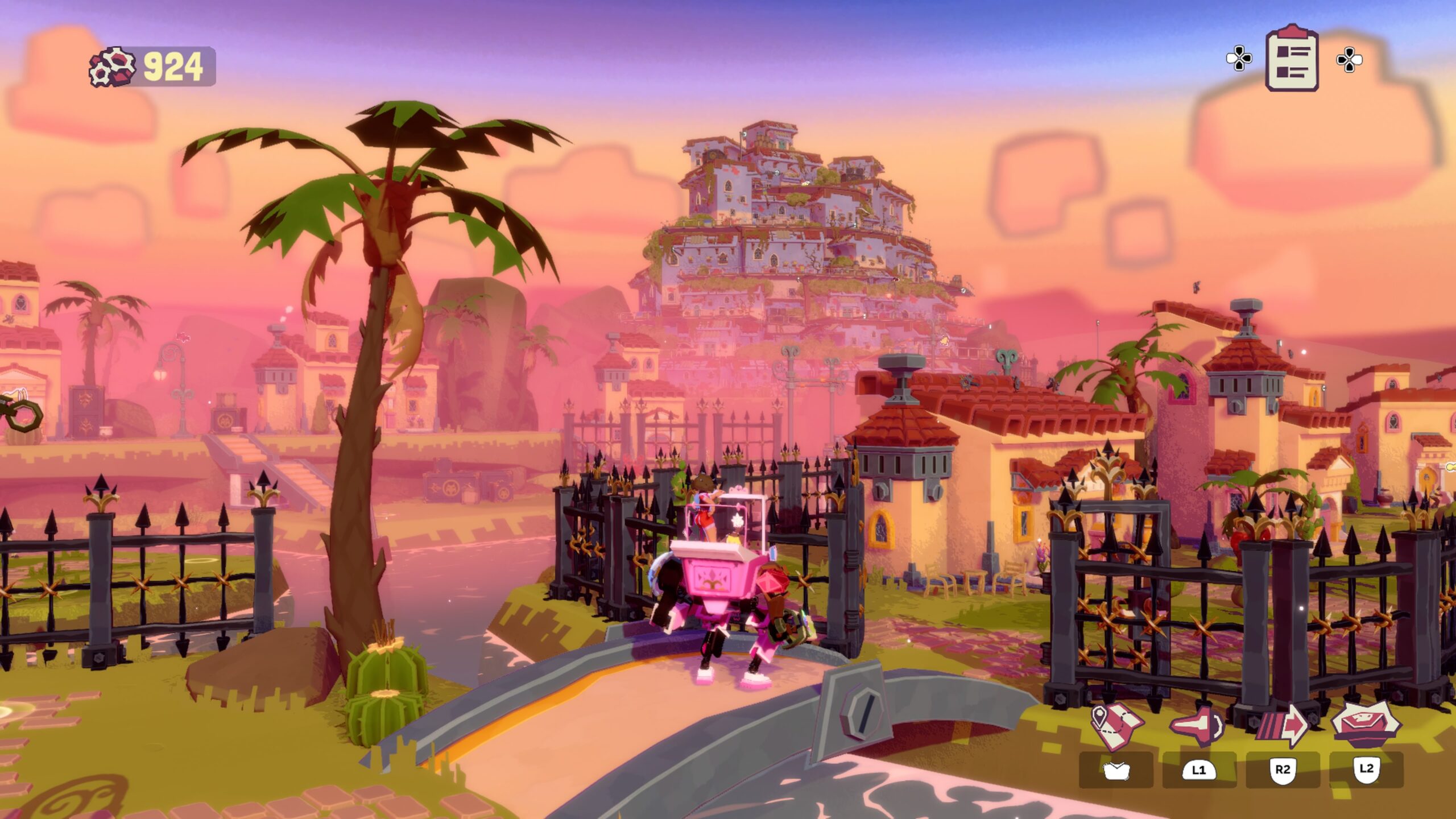
Now into the gameplay! You’ll be able to traverse the world of Meyndish Isle as you take control of Goddess since both Samara and Amani ride her to travel around. When you first arrive at a village you of course won’t be able to go everywhere, but you will find a way to get further into the village as you progress through the story. You’ll also unlock shortcuts so you can get quickly from one side of the map to another quickly as the villages are surprisingly big. Of course, you’ll be traveling to quest points, but there are other things that you’ll be doing. First of all, you’ll be foraging for a lot of the ingredients you’ll be using. Each village has their own unique set of ingredients native to that area and each ingredient also has their own spawning points. Most ingredients you just have to walk over to collect them, there are a few that require an upgrade, and they’ll spawn back in after some time. There are also fishing spots where you can do a simple fishing game to catch the fish native to the village and later will get crab pots so you can get crustaceans after enough time passes (don’t worry, this will show how long you have left before you can collect). As you’re walking around, you’ll also notice LinaWorks posters and LinaWorks floating billboards which you can actually destroy (the billboards require a late game upgrade). After you progress some into the village’s storyline, you’ll also notice that certain villagers will become hungry. Goddess actually has a handy power where she can reveal the meal that someone is craving. It’ll be added to your list of orders and you can see if you have everything you need either through your menu or when in the shop before you go into the Preparation Realm. Once you cook up their meal, all you need to do is deliver it to them. This is both for story orders and optional orders.
You will naturally increase your reputation with each village as you progress through the game, but you can do more to raise it further. You don’t have to max it out to finish the game, but you do gain rewards when you level up your reputation which rewards you with new skills, cosmetics for Goddess (which you can mix and match), and scraps. To raise your reputation, all you need to do is destroy LinaWorks propaganda, feed villagers, help fix infrastructure through giving scraps and meals (which sometimes it’ll give you a new shortcut), fight Lina’s Goons, and just simply progress through the story. There are also story locks so you can’t just grind it out right as you arrive. I’m not sure if the game saves any reputation gained after you hit the lock, but I think it does.
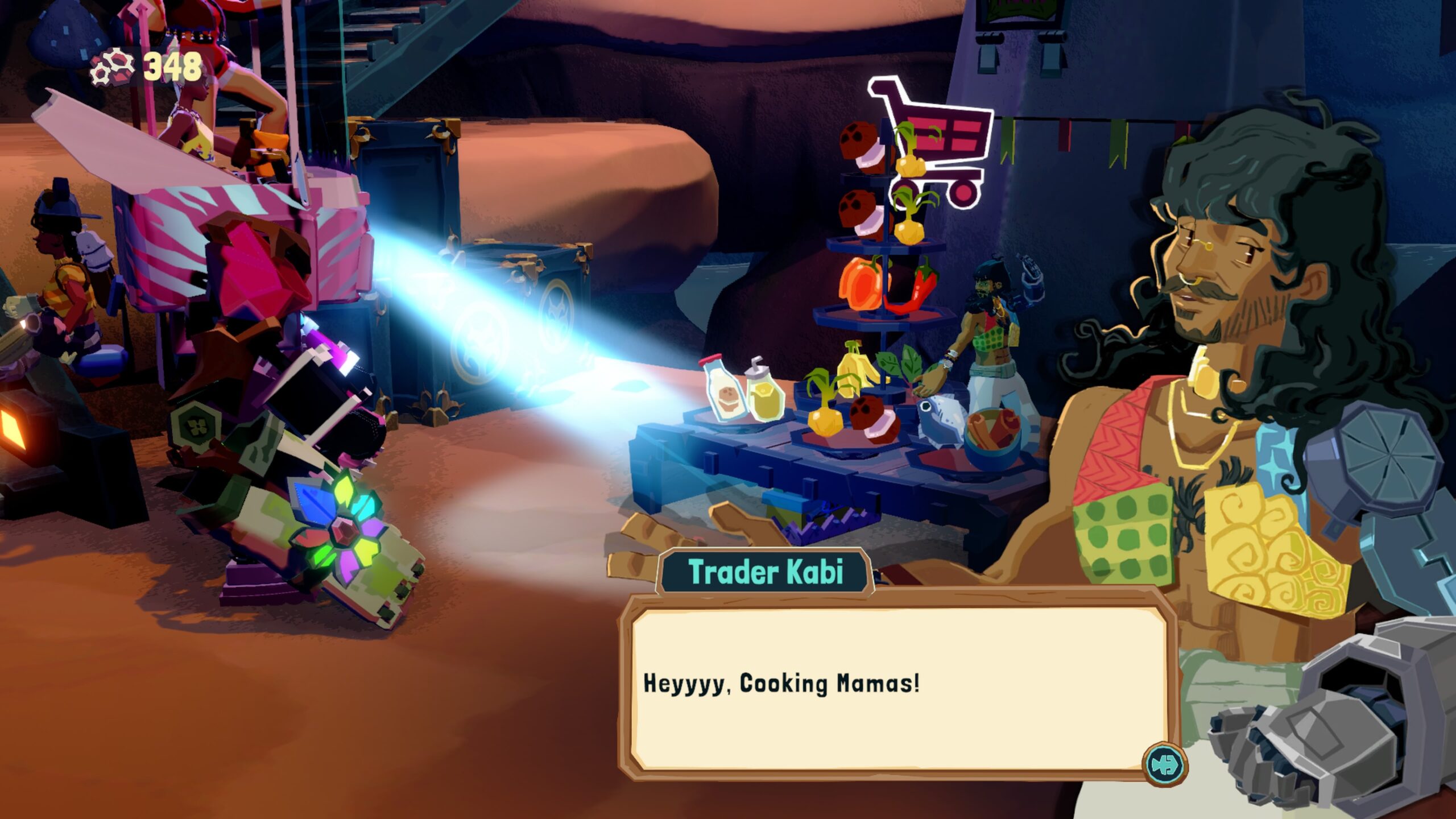
There’s also Kabi, the too flirty for his own good shopkeeper. While you can forage for a lot of the ingredients, there are also a lot that you won’t be able to. Those are basically the refined ingredients which you’ll either use scrap to buy (like bread) or give Kabi ingredients so he can process it into what you need (like potato flour or fish sauce). You can also buy the basic Health/SP/Revive items from him and he’ll be where you can upgrade Goddess and your party as a whole. Upgrades unlock as you progress further into the game and you’ll be able to buy upgrades to give Goddess more traversal tools to get past parts that block you; as well as upgrades that help your whole team like upgrading your attacks, giving you more changes to get boost points, and even increase how many servings you can get when cooking.
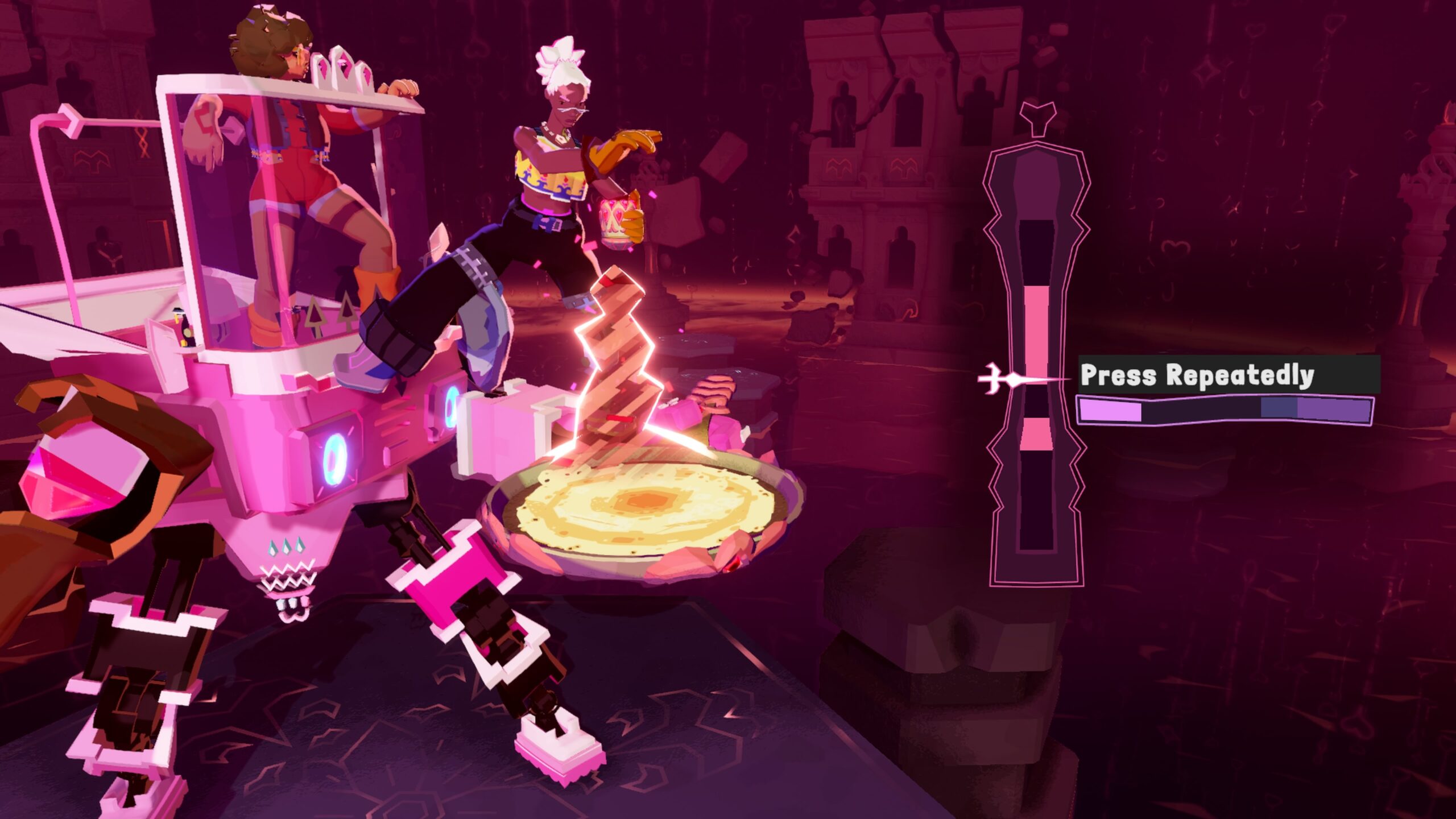
You’ll be cooking a lot throughout Dosa Divas where you’ll cook dishes to progress the story, cook up an order that you picked up, or for yourself. Once you have all the ingredients you need, you just need to go into the mystical Prep Realm and select an order that you picked up from one of the villagers, pick a recipe you discovered, or just do a freeform recipe so you can put whatever your heart desires. Either way, you’ll be asked to pick out what ingredients you want to use. If you’re going by a recipe, it’ll be variations of asking for a specific ingredient or asking for a certain element (like wanting produce or something sour) and leaving it up to you on which ingredient to put in that matches what you need. Each ingredient also shows you what it’ll add in terms of the effect it’ll have when used in combat. Once you put all the ingredients in the pan and it matches up with what the recipe calls for, you’re ready to cook!
Cooking here has you do a minigame to determine how well you did (don’t worry, you can’t burn anything haha). You’ll get two out of the possible six minigames and how well you do determines how many servings of that dish you make. You’ll either be asked to pour the perfect amount of batter; swirl the batter on the pan at the desired speed keeping it in the highlighted section; flip the pan when the cursor passes by the highlighted section, season up your dish by pressing the button when the cursor is over the highlighted sections, cut the food which you’ll actually mimic in the minigame as you cut the highlighted boxes that comes down the lane, and finally pray over the food and making sure you keep the cursor as much in the center as possible. Each minigame has a meter that determines how well you did and you don’t have to be perfect (most of the time) to get the Super rating on the minigames. As you progress further into the game, it’ll also surprise you by have the lights flicker off and you needing to get them back on and weird little splotches blocking your way that you may or may not be able to swat away. Not to mention where and how many highlighted sections/boxes you get gets randomized. Once you do the two minigames, you’ll get to see the dish in all its deliciousness and see the results. Once you cook all the dishes you wanted or needed, you just need to exit the Prep Realm and deliver the orders.
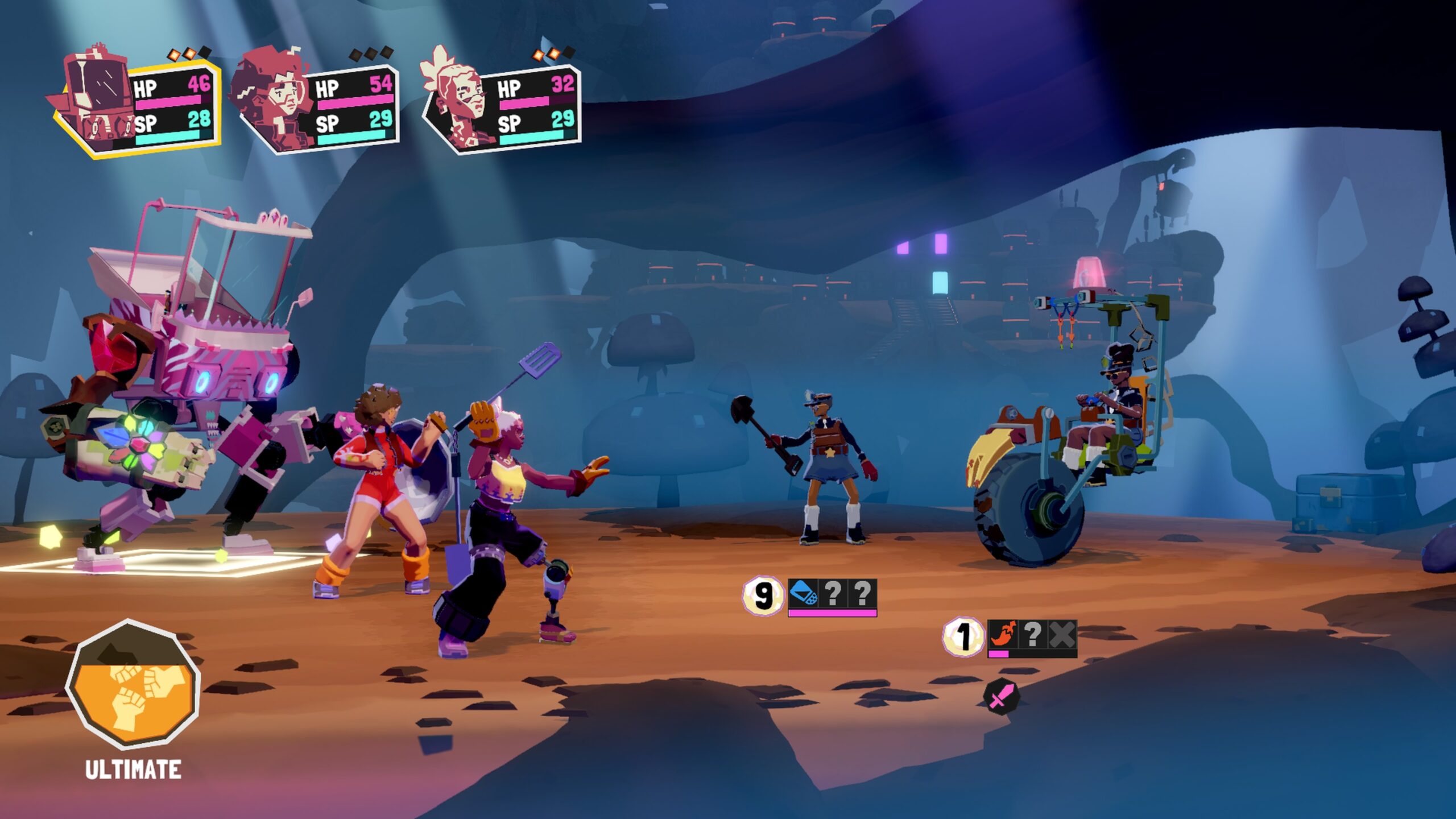
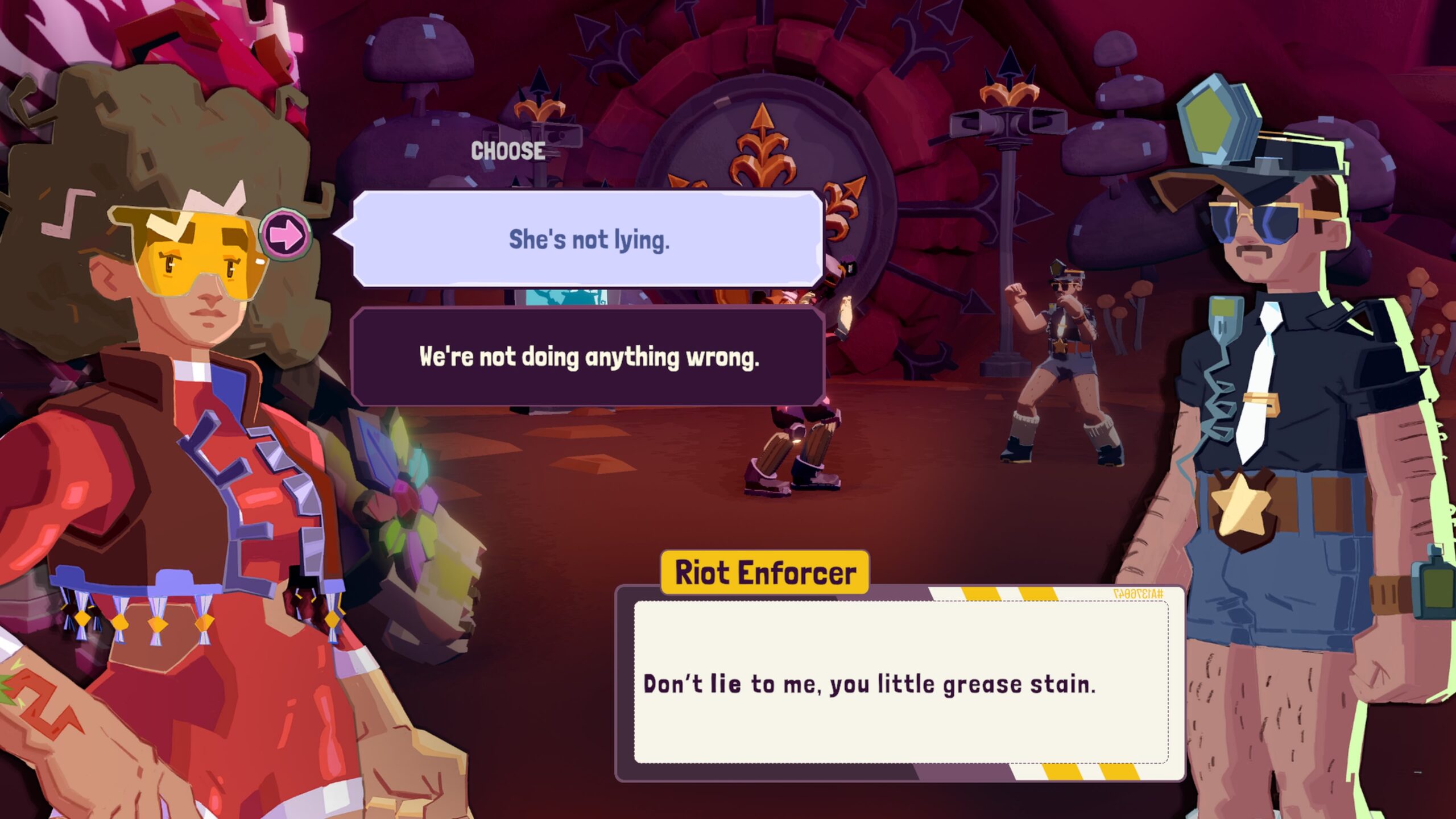
Last, but not least, the combat. Enemies, which the game calls Lina’s Goons, are spread all around Meyndish Isle and you’ll either get into fights through story progression, run into them in the overworld, or if you walk by them too close for too long. Combat in Dosa Divas take on an active turn based combat style and the enemies go first. There are three different enemy groups that you’ll be fighting, with each group having different types that signal what attack they’ll do and what level they are. Anyway, enemies can buff themselves or give you a status effect (which is the usual like silence to stop you using skills or confusion that gives you a chance to not land a hit) and will attack one of your party members. This is where the active aspect comes in as you can block attacks as they come in. The enemy attacks are choreographed well so you can learn when is the perfect time to block, but you also get a little star pop up to help you out. If you don’t try to block or mistime it you’ll take the full damage (which can be a lot), blocking early (which is when the star is up) will block some of the damage, and blocking right before it makes contact will grant you a perfect block and block all the damage. Perfect blocks are difficult to get at first, but once you learn enemy attacks you’ll get the hang of it.
On your turn, you can actually choose which order the party members act, which is really nice. Each party member wields their own weapon: Samara has her wok, Amani her dual spatulas, and Goddess wielding herself. I guess it’s best to go into the weakness system first. As you’ll notice, every enemy will have between 1-3 icons that match with different flavor profiles like spicy or savory. It can be revealed from the start, or be a mystery that you need to guess. These icons are actually what that enemy is craving and thus is their weakness. Hitting their weakness will lower their shield and once it breaks they’ll become Stuffed. This is basically a stagger as Stuffed enemies will be unable to attack and will take extra damage as they can’t help but think about dishes that they’re craving. To hit these weaknesses, you’ll of course attack them as every attack and skill you can use between all of the party members also have a flavor tied to them. So you can match an attack with an enemy that has that flavor weakness (or vice versa).
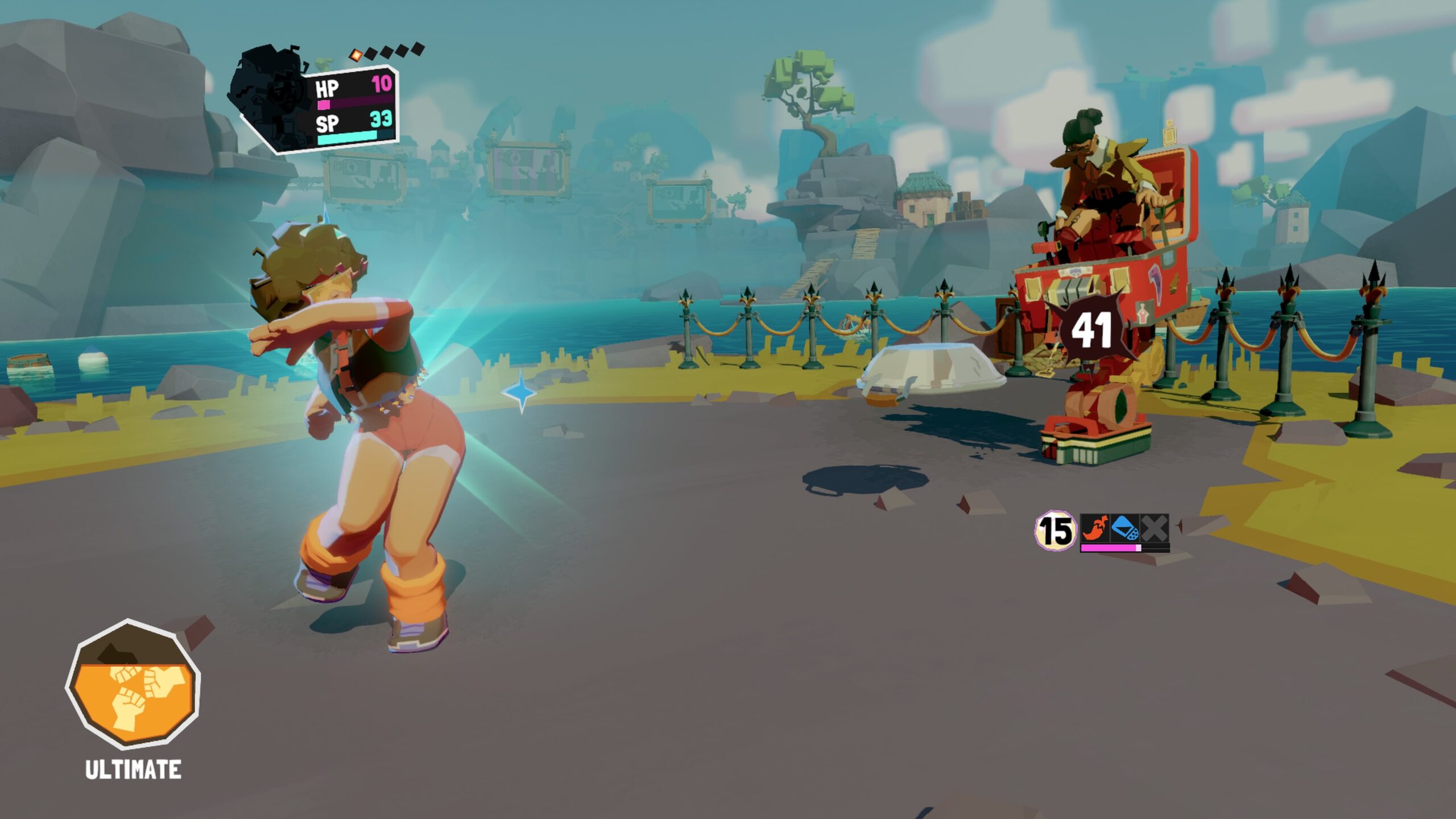
You have a basic attack, which has that star pop up so you can get an extra attack in (and you can get a Perfect Attack but I don’t think I ever got it). You also have skills, as long as you have enough SP, in which what you need to do varies and can determine how much damage or attacks you’ll do to the enemy (which the latter helps a lot with lowering shields). You can also use an item, which mainly will be the dishes you cooked up and each one will have a base heal, SP gain, and possibly being able to cure a status effect depending on the dish and the ingredients you used. There’s also this other little mechanic known as boosting. Each turn where you don’t boost will grant that character a boost point and later on you can even upgrade your team so you can get a boost point on perfect blocks. You can then use these boost points to boost your attacks, skills, Ultimate, and even items. You can boost an action up to three and this will have different effects depending on what you’re boosting. For regular attacks it’ll give you extra hits per boost, skills will increase the amount of damage it’ll do, and for items it’ll increase how effective it is.
Lastly, there’s also Ultimate Attacks (or I guess Ultimate Action since only one is an attack). You have to wait for the meter to fill up, which does with each attack you land and block, and you can then use a team action (which will take up one of your party member’s actions. If you boost this, it’ll become more effective.
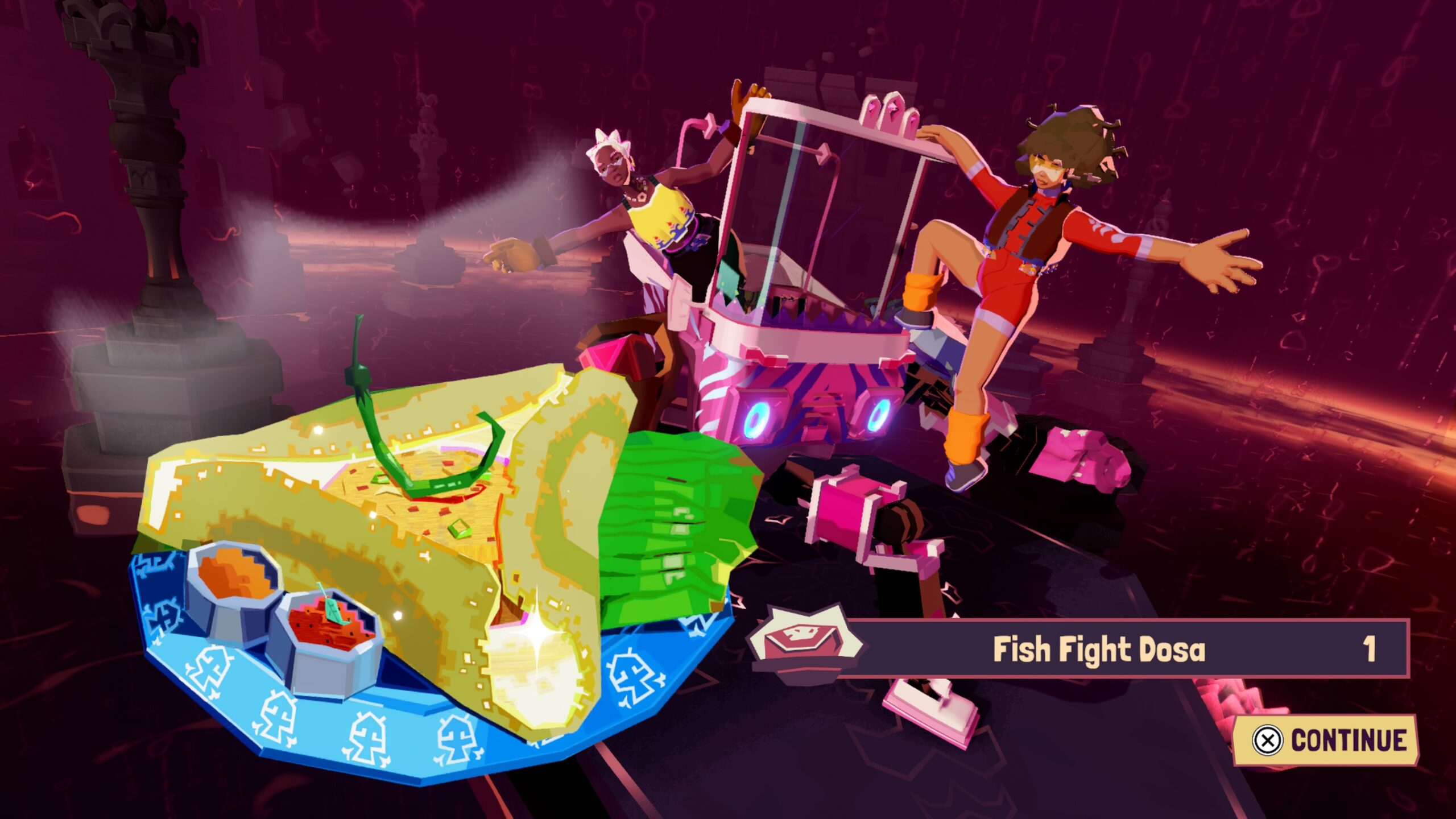
Once you K.O. all of the enemies, you’ll get to see how much experience you got (and if you level up everyone levels up and you get to choose which stats you want to put more points in), and a Lina Loot box will appear in the overworld. I kind of wish this was just added automatically to your inventory cause it can be pretty easy to forget to open them up once you get out of combat. If you happen to fail, you actually get to choose whether you want to continue, restart the whole battle, or load from a save.
I’m happy to say that I enjoyed the gameplay like I thought I would. I enjoyed traversing through the world and I quite liked how the villages were designed. I also really liked how you rebuild Amani and Samara’s reputation with the villages through helping them out and I really like how the game paces overworld travel. Also, the first village has a dog which you can pet and follows you around. I enjoyed the cooking minigame too. I was surprised it was simple, and sure it would have been nice if the different types of dishes had their own set of minigames, but I didn’t really mind and it does fit with the characters here. Samara and Amani do seem to be more serious about cooking and I like how Goddess was included. The six possible minigames were nice and simple, which helps out when the game decides to start throwing in the different difficulty variations into the pool. I also enjoyed the turn based combat, which if you played Thirsty Suitors would feel pretty familiar. I really liked how all the combat elements were themed around food and I quite liked the changes that were made between Thirsty Suitors and Dosa Divas. It does help set the two games apart while also keeping the unique spin that the developers introduced to turn based combat. It does also help the combat not feel as slow. I felt the game does a good job with telegraphing enemy attacks and while all the party members basically have the same attacks, I do like how there were only a handful of actions and the animations fit with the character doing them. I also didn’t mind the enemies going first, they’re already at a disadvantage they can have that. Not to mention that once you go into the second half of the game, the enemies do get harder not just through increasing their health and damage output, but their attacks become multi-attacks (which definitely caught me off guard). Though, I was a bit annoyed that a buff that the enemies put on themselves 99% of the time succeeded. I felt it should have just been guaranteed as there was only one time it wasn’t successful. Oh, and I liked the various enemies that you’ll come across and I think it was pretty smart to make enemy groups made up of three different enemy types that helped give the game a lot of enemy variety.
I played the whole game on the default normal difficulty, and I honestly didn’t have any trouble other than when I first encountered a new enemy and during bosses. The first half of the game is pretty easy once you get the hang of blocking and I honestly barely used items. Oh, and I loved the bosses here. I really love how the bosses were handled both story-wise and gameplay-wise. All the bosses felt different, were a challenge to go up against, and were pretty fun. Also, I’m glad debuffs weren’t used as much throughout the game cause man is it annoying whenever the enemy goes to debuff you right after you use an item to cure it. Even though they are used to give you more of a challenge, like during boss battles, it still annoyed me a bit.
Also, I love how Samara and Amani taste tests every dish they cook. I found it realistic, as I even do that too. I call it the cook’s fee. Not to mention that Goddess has a good handful of different cosmetics which you have the freedom to equip the full wrap or only equip it to a certain part. So if you think the windshield from a different wrap looks better, you can switch it out if you want and mix and match.
As for negatives, I can only think of a few and most are pretty minor. Aside from what I mentioned regarding the story, I did notice that there was one voiced line that was different than the text and there were two voiced lines that were in different quality than the others (presumably those were re-recorded and the VA didn’t have the same recording environment). I did also wish there was some way to sort your ingredients when you’re picking them for a dish. It’s fine when you first start out, but once you go into the latter half of the game you’ll have a lot. The game can also feel repetitive if you fight or cook a lot to raise your reputation with the villages. I did also wish Kabi’s location was based on where you were, rather than how far you’re into the area, as sometimes it can be annoying to go to the other side of the map to take an order only to need an ingredient you can only get from him (or need an ingredient that only spawns all the way over there).
I can also see some people not liking how the second half of the game is structured, but I personally liked it.
To tie this all up in a bow, I have to say that Dosa Divas have superb sound design and visuals. The various sound effects here are well done, selling the impact during traversal or combat while also making the cooking minigames satisfying. I didn’t feel like it was too much to the point where it was annoying, which is especially important considering you’ll hear Goddess’ horn a lot throughout the game (which I honestly found pretty endearing that she does a series of horns on the battle results screen). The stomach growls were a bit too realistic though haha. I didn’t even know sympathy stomach growling was a thing until I played this game. I also really liked the soundtrack. All the songs are wonderful and the addition of the heaping dash of South Indian culture really gives it an unique identity. Just be careful during combat as they are especially dangerous. They’re so good you may find yourself grooving to them and then take an attack to the face. Dosa Divas is also partially voice acted and let me tell you, you’ll probably wish it was fully voice acted because these voice actors did a phenomenal job. All the voice actors did a fantastic job in bringing their characters to life and there are so many lines that were elevated thanks to the line deliveries.
Dosa Diva’s art style won’t be for everyone, but I will say that they did a great job with designing all the various locations, enemies, characters, and dishes. All the locations look unique, even if the game doesn’t tell you you’ll easily be able to tell the type of village each location is, and have their own color palettes. The game is also quite vibrant, and even when it leans more towards a muted color palette it is used to fit the kind of place it is or the mood of the scene (don’t worry though, there’s still a ray of light peaking through). I liked the designs of the various enemies and the variations of those enemies, as well as their attacks which fit them all really well. The characters are all well designed and look good. You can tell which village someone is from just based on their clothing. The character sprites for the key characters are also well done, have some of their personality reflected in their design and poses, and have some of my favorite visual aspects of the game. My favorite character design is honestly Yomi’s (I especially love her headband). I did also notice that parents and their children also share some similarities in their outfits, which helps connect them visually. You also get to see the different outfits that the game’s main family had over the years (it’s a shame they didn’t all get different sprites) which I really liked. This and family members sharing similar elements creates some really great visual storytelling for the sisters and especially for Lina. Lina’s claws that she has in her present day design scares me though haha. Oh, and I love the DiVA designs and animations. Goddess’ various cosmetics look great on her too and I especially love how the first one you unlock is pink (which you know I rocked the whole game).
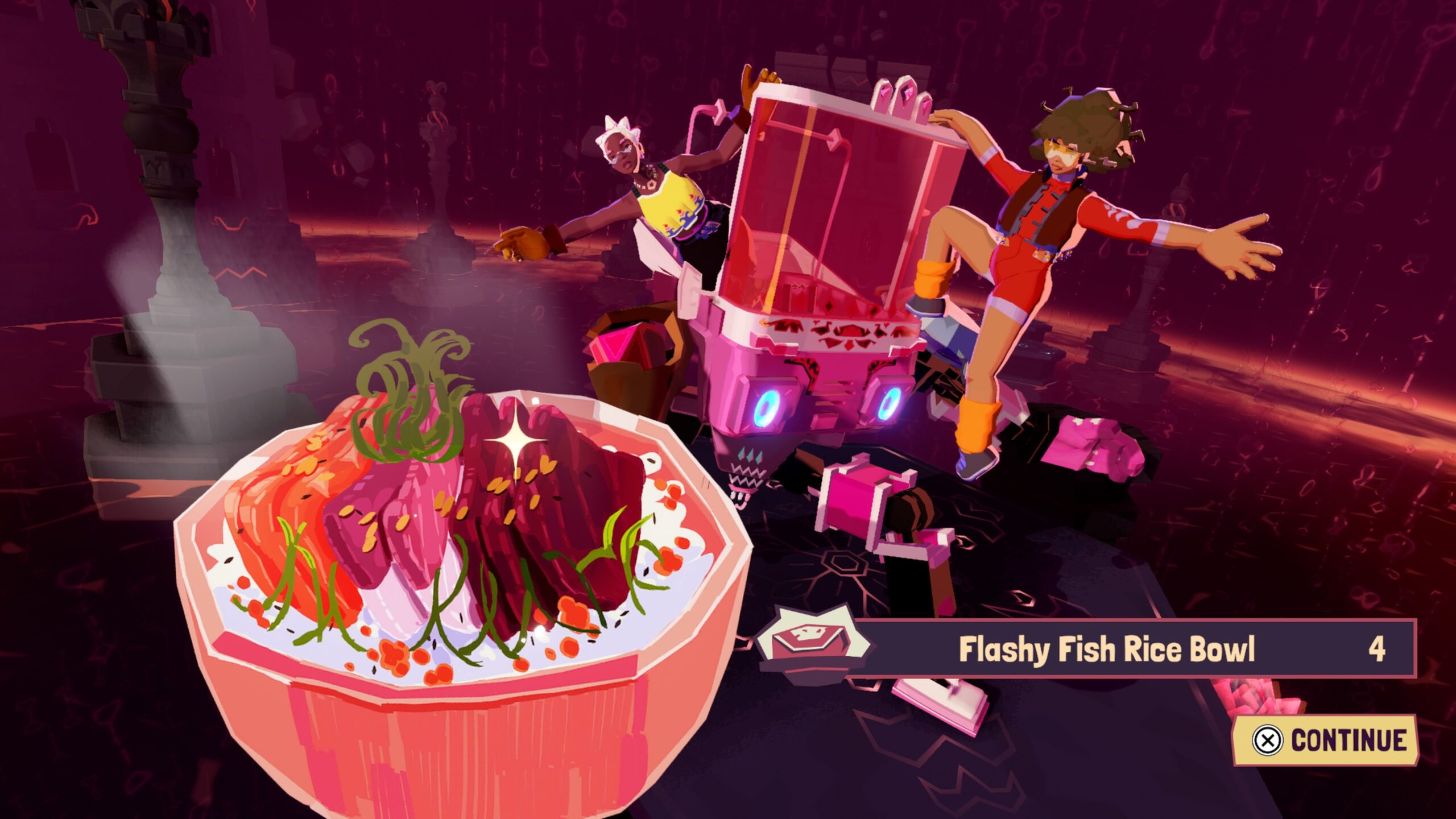
And the food. Oh man, the food. The food here looks so delicious and I loved every single food design that this game had. Every time I made something new I was like “oh my gosh that looks so delicious, I want that” and I had to make sure I ate before I started playing because the game made me hungry if I didn’t. It was quite a happy surprise considering I thought you’d only be making dosas.
The game also has some nice little details sprinkled in. Like while traversing the world you’ll notice that Samara/Amani does the same motions that Goddess does. This may be a bit of a spoiler, but even the way Samara and Amani are riding Goddess suggests who is more bonded with her. Or how the way the various attacks are animated changes whether it’s boosted or not (I love Samara’s boosted Wokarang animation). The way enemies flinch due to attacks is also situational as you can notice that it matches with how the attack is hitting them and enemies sometimes even have a chance to say something once they’re knocked out. The Techbros have the funniest knock out lines. Most of the loading screens here even show off some of the game’s concept art, which was really nice.
Verdict
All in all, Dosa Divas turned out to be a delightful game that hit all of my flavor weaknesses. While there were some aspects that were a bit annoying, I enjoyed Dosa Divas throughout my whole playthrough. I enjoyed the story, slowly finding out what happened all those years ago, and I loved the direction the story went down. The amount of care put into the writing also paid off through the way the characters were written and how their writing weaved into the story and mysteries. I also enjoyed traversing through the different villages and helping them out; combat was pretty fun and challenging; the bosses were amazing and felt unique; and the cooking was simple and fun. Not to mention how amazing the voice acting is and how great the soundtrack is. The visuals won’t be for everyone, but if it is you’ll also be faced with some great visuals and animations.
So, yeah, if you like turn-based RPGs, and find the story of two sisters taking a roadtrip to reconcile with the loved ones that gets a bit sidetracked by their sister’s evil fast food empire, Dosa Divas is worth picking up. And if you played and enjoyed Thirsty Suitors, you’ll definitely enjoy Dosa Divas. If Thirsty Suitors was bombastic, Dosa Divas is the more serious, realistic sister.



Recent Comments