Demo Impressions Part 29
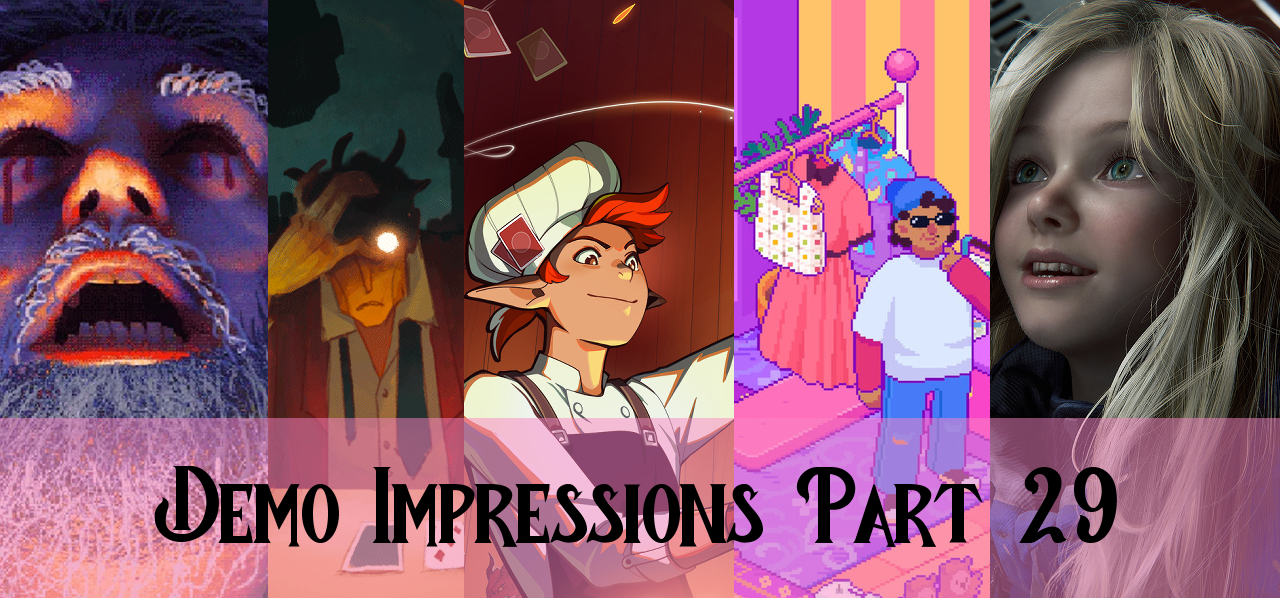
Featuring: Arcane Eats, Black Jacket, Forbidden Solitaire, Pragmata, and Thrifty Business
As I have so many demos I wrote impressions for to last for a good couple months, it’s always nice when I have one in the barrel when Steam Next Fest comes around. These are demos I played before Next Fest started, I was a bit busy the past two days, but these are still worth checking out. I’m so glad demos are making a comeback, even if they’re usually limited time. As always any demos that still have a demo will be marked with a (*).
Arcane Eats*
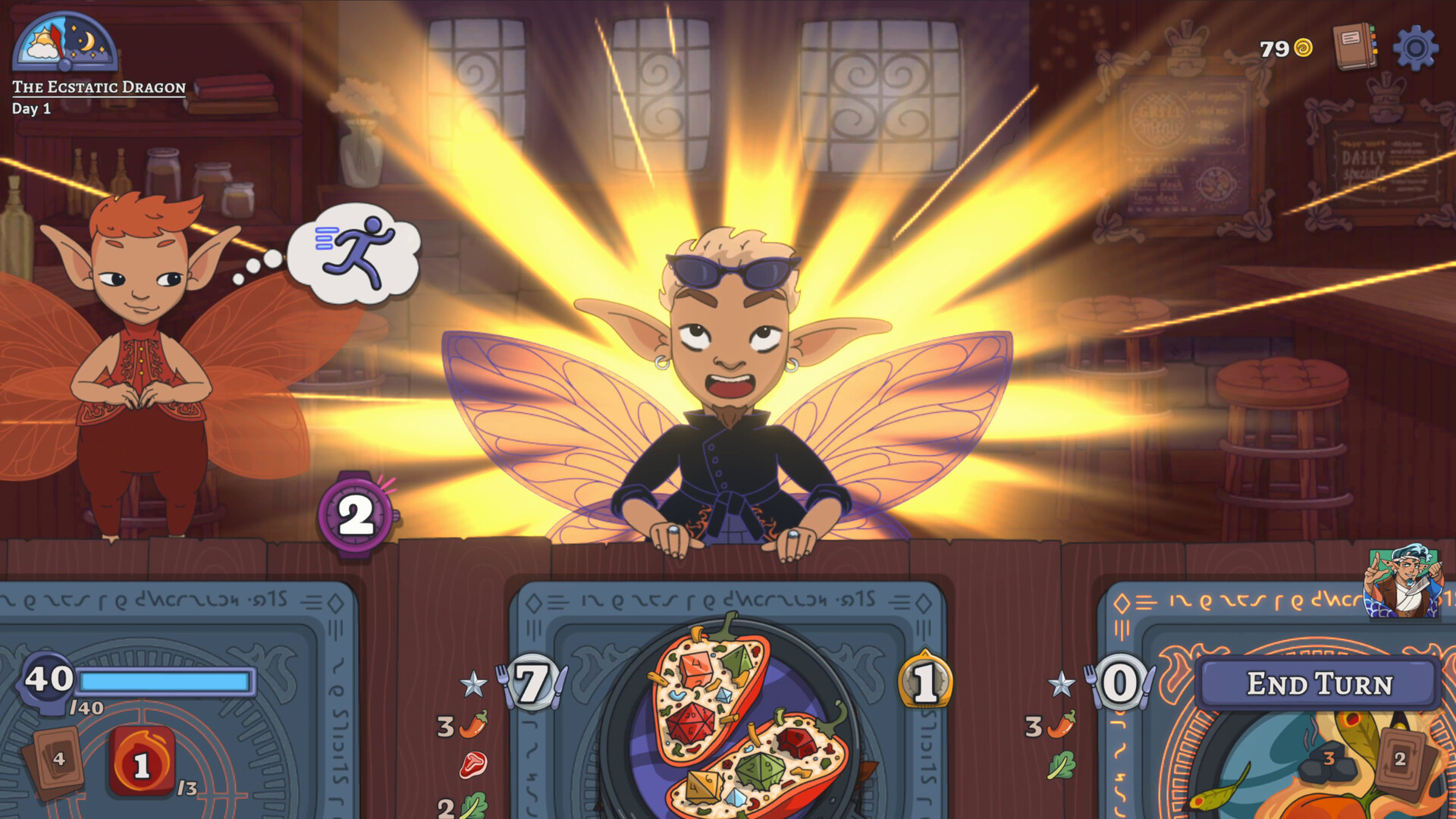
This one was a game I was looking forward to despite being bad at deckbuilders and I was waiting for this to get a demo so I could have a taste of it. And, well, what a taste this was. Not to brag, but I think I’m actually pretty good at Arcane Eats, which was pretty surprising.
Arcane Eats has you put in the role of a chef who just moved to Savory Springs to open up your own restaurant. After proving your skills to the Mythril Council, you’re granted resources to start out and given a choice to pick between three guilds. The guilds basically determine what food cards you get and your crew which determines what effect is applied to your cards, your starting deck, your health, and starting coins. Before you open your restaurant, you can go to the other shops in Savory Springs to help bolster your deck. Like buying more ingredients, healing yourself, or blessing (aka adding a new effect) to one of your cards as long as you have the coin. Though, some shops are only open on certain days and their inventory changes. So while you may find yourself buying something every day, you may want to save money just in case an ingredient comes in the next day. When you feel like you’re ready, you can open your restaurant.
Gameplay here is actually pretty simple. Every turn you do progresses the time and, as time passes, customers will come in. Your goal is to feed all of your customers while also not losing your mind (aka health). To do so, you place ingredients on the cooktops, which there are three; which also corresponds with there being three seats for customers. Each turn, you’ll draw cards which will be a mix of ingredients and tools. Each card, of course, costs energy to play and there is a lot of variety here. There are ingredient cards which you’ll play on the cooktops. Most ingredients have a cook time which, you guessed it, ticks down with each turn as time passes allowing it to be cooked. There are also spices or sauces you can put on top and tools you can use to, for example, lower cook time. A lot of cards also have effects that even matches what kind of ingredient it is. Like hot sauce will add spicy to the dish or buns will add two bun cards to the dish. Oh yeah, there’s also stacking which increases how much it fills the customer’s stomach and adds any effects that the cards had. You also have tools like oven mitts which gives you Toughness (or shield). Well, now let’s go into the customers.
Each customer will come in being hungry and you can see how much they are based on the number they come in with. Your goal is to cook dishes to satisfy them and, even better, it doesn’t matter what cooktop you cook on as you can move dishes to any customer. However, they won’t wait forever or just sit there. With each passing turn that they’re there, they will get Impatient. The customer has a couple actions they can take and you can see what they’ll do at the end of the turn. They can do nothing, but they can also Complain which damages your Mind (health) and their Complain power is equal to their Impatience. It also seems different customer types (which are based on their race) has unique actions like swiping the top ingredient on the dish in front of them or on all of them. While others may have passive effects, like gaining Impatience every time they’re fed, that you have to work around. Or they can have both (which are usually relegated to boss customers. The last customer(s) also tend to have a little bit more up their sleeve (which I’d kind of call them mini-bosses) in addition to having more hunger. Like they might come as a party where all in the party needs to be satisfied before they leave.
Once they’re satisfied, they’ll pay you, leave, and possibly be replaced with another customer. That last one depends on what turn you’re on, if closing hours passed, and if there’s anyone waiting (which waiting customers will still get Impatient). Once you fed every customer, you’ll get a screen detailing how much you earned and even your top three dishes that you made. Which the game actually names and you can even rename them. The game will then progress to the next day and the loop repeats.
The weeks here only include four days, but on the last day of the week you do have a boss fight in the form of a Mythril Judge. You are given one ingredient you need to put into a dish and feed the Judge and you’re going to be up against a challenging customer. The first Judge is a parody of a popular chef and maybe this is hinting that all Judges will be parodies. I hope this means we’ll get a Gordan Ramsay parody Judge haha. The first Judge is challenging, but pretty approachable. It looks like every Judge will have a unique action as well. If you successfully satisfy the Judge and feed them a dish with the challenge ingredient, you’ll get a Mythril Star (which is a parody of a Michelin star). I believe the goal here is to try and earn all 3 Mythril Stars on all crews, which each guild has three possible crews.
So, yeah, I really liked Arcane Eats and I feel I was actually doing pretty good. I’m not sure what causes food to get burned, but otherwise, I really like the art style here, the way this game combines cooking and deckbuilding, and all of the sound effects here. The demo is only over the first week of the game and only one guild, with some buildings closed off, but so far the difficulty curve feels good as well. Plus, it is really satisfying feeding customers, I love the animation that the last customer has when you feed them fully, and I love how the game makes up names for your top three dishes. I’m even more looking forward to this one now that I know I will pick it up. I can’t wait to see all the different ingredients, customers, and dish abominations that I will make. Arcane Eats is really solid, polished, and I can already tell this is going to be loved. I even went “oh man this is the end of the demo?!?” when I reached the end which is the sign of a really great demo.
Black Jacket*
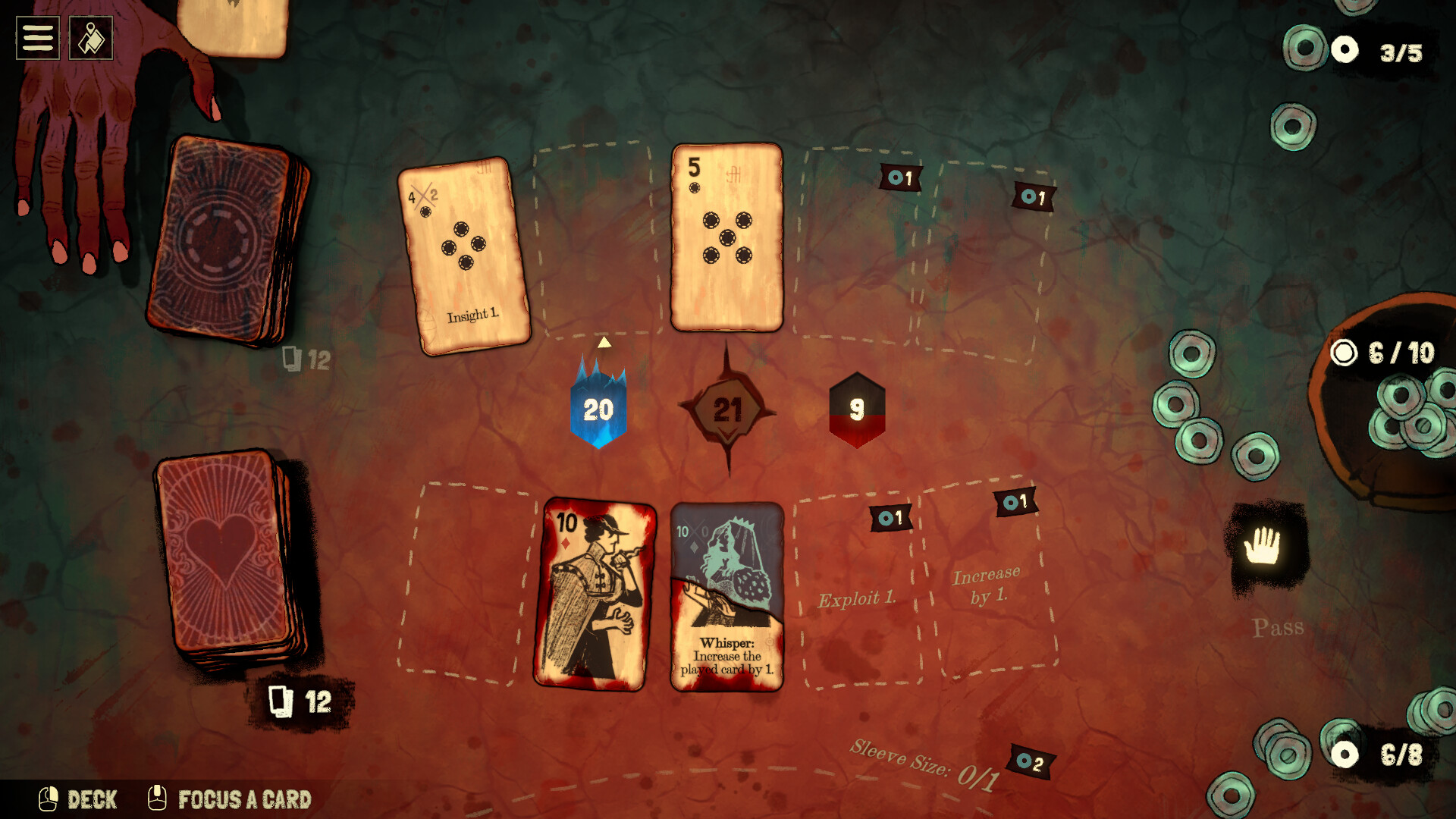
I’ve had this wishlisted ever since it was announced and I’ve been waiting for the demo to release! Hey, if there’s any card game that I’ll be good at, it’s Blackjack. In Black Jacket, it turns out that you recently died and woke up in the underworld. Don’t worry, weary soul, as the ferryman promises to take you back to the life you were robbed of…for a price. A steep price. So how do you get the coin to pay the ferryman? Gambling of course! Luckily, you meet Reed very early and he’s pretty generous. Giving you (and maybe the other souls?) starting coins and teaching you the ways of Blackjack.
Blackjack in Black Jacket is basically what you’re used to. You pay the blind, draw cards, try to hit or hit as close to 21 as possible but not over, and repeat until either you or your opponent runs out of coins. However, there are some twists here to make things a bit more exciting and challenging. For one, both you and your opponent have your own decks. As you progress through the run, which is structured like Slay the Spire where there are one to three paths with different nodes, you will be building your deck by adding new cards, burning cards, or awakening (upgrading) them. By the way, map nodes will either be a game against a soul, the shop, an opportunity to gain new cards, gain coins, and finally a game against a boss at the end of the map. And even better, the game tells you what to expect in each node, which I really like. Anyway, cards and the last two card slots on the table also have effects. Only awakened cards have effects, and well the Ace of course, but these can help you out. Like letting you peek at the top card(s) in your deck and decide whether to put them on the bottom or keep them on top or swap the card with your opponent. However, the last two card slots on the table do require you to put a coin into the betting pile. It also does seem the effect the last two slots have are randomized per game and, of course, you can only play as many cards as you have slots. Next, coins in the betting pool are handled a bit differently. Whoever wins get their coins back, but the loser has their coins put into the winner’s pot. So you can take a big risk in how you play your cards or even make your opponent put more coins in so the game is shorter. The winner’s pot is given to, well, the winner but it is capped so you can’t just horde it. The winner’s pot is used so you can buy things from the shop (which can be new cards or trinkets) without taking from your personal stash, but you can still do it anyway if you wish. If there is a tie, the winner is decided by the highest card value; however a pure blackjack will always win over a dirty 21. Oh, and you can also sleeve cards as long as you have the coins to pay for it. Letting you sleeve say an Ace or maybe a card that would bust you. Lastly, bosses and certain souls will also have Curses, which basically causes an effect to happen. For example, the first boss forces you to exhaust sleeved cards after each round.
So far, I really liked Black Jacket. I’m bad at deckbuilders so I tempered my expectations, but this one turned out to be really interesting. I really liked the way they tweaked blackjack to fit this roguelike deckbuilder genre and I think it works really well. I didn’t dive too deep into the game, but it seems like each suit has their own unique Awakening and it seems some souls even have unique suits. And talking about Awakenings, I really liked the effects here. I think my only complaint is that I wish you could see a description of the card that an effect adds. I also like the difficulty curve here as well. Oh and the visuals and sound? Perfect. I love that it’s all themed around you being in the underworld playing against other souls wandering around and the vibe definitely feels like it. I also love the way hands are animated here and how you can actually tell your opponent’s personality based on their hands and their deck. And oh my gosh, the voice acting?!? I was not expecting voice acting and man it is top notch. They picked the absolute best voices here, especially for Reed. I could listen to Reed for hours, he’s so soothing.
So yeah, I’m definitely looking forward to Black Jacket.
Forbidden Solitaire*
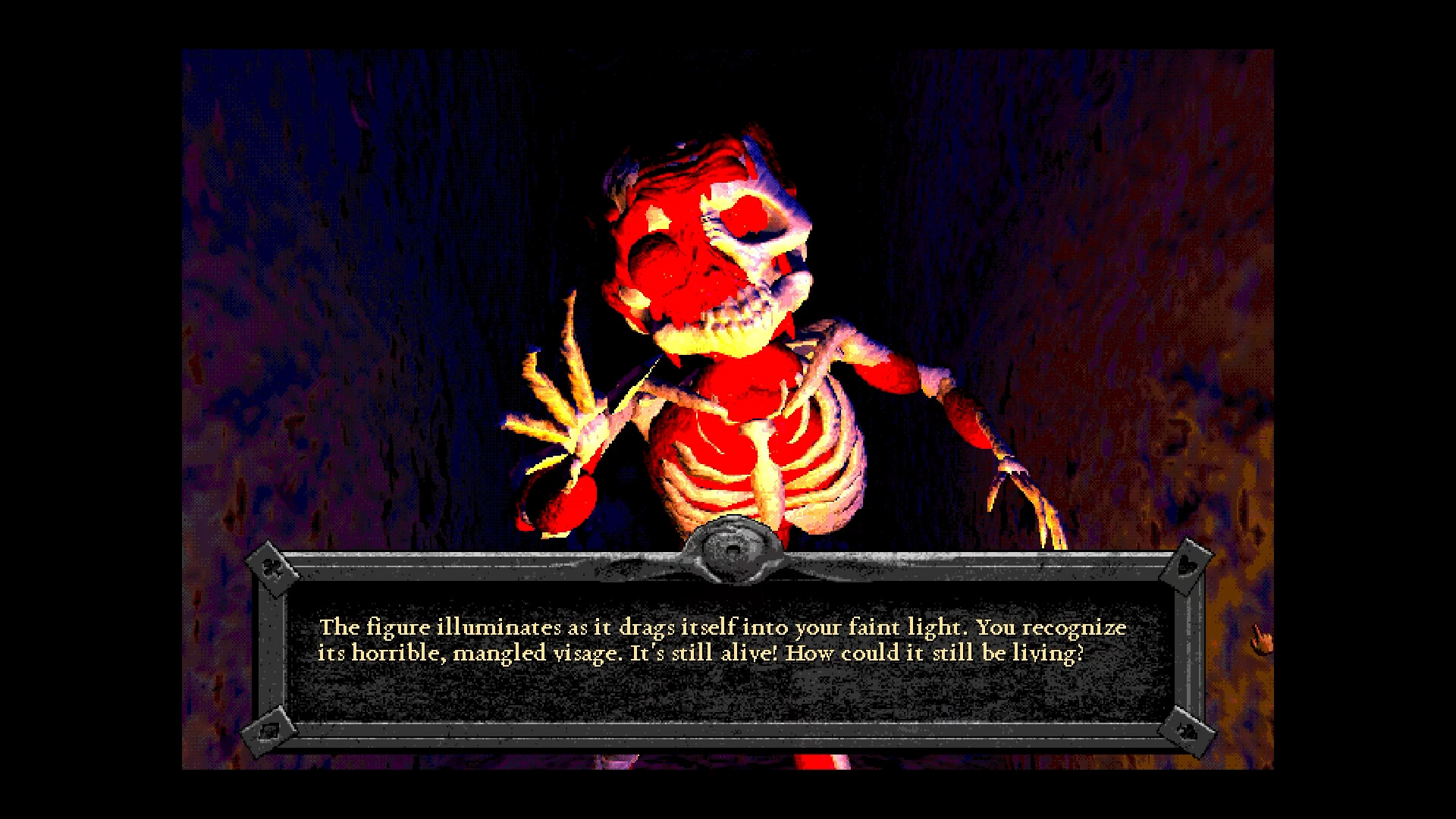
Oh my gosh guys, this demo is so good. Well, you do have to like Solitaire, but oh my gosh this demo was so great. I literally went “nooooo” when the demo ended cause I was invested in the mystery, was enjoying the in-universe game, and I was in the Solitaire zone. In Forbidden Solitaire, you play as Will Roberta who has just found a nice thrift find: an old weirdly violent card game called Forbidden Solitaire. Will immediately tells his sister Emily where you find out that both of them really wanted to play the game as kids when it first came out, but their mom was always against it. Of course, they’re not going to tell their mom now. So Will boots it up and starts playing.
Yep, this is a game that’s framed as the main character playing a game haha. The game proper takes on the look of old computer games, and honestly I think it pretty much nails the look and the vibe, and the game is about the player going through a dungeon. It’s pretty linear, as the game is narrated with text all throughout, but man is it pretty fun and suspenseful. Once you come up against an action, you’ll be playing a round of solitaire with the layout varying every time. I don’t think I have to really explain solitaire, but basically there’s a card at the bottom of the screen and you match it with a card higher or lower than it in the play area. If there’s no cards you can match it with, you draw a card from the stock. There are also some other mechanics like Joker cards having different effects, like being able to match with any card, lock and key cards, and there’s this mana mechanic where it’ll randomly destroy a couple cards in the play area when it’s fully charged. There is also combat here, which is basically the same as regular Solitaire rounds but your combo doubles as your damage, adds shield cards so you can block damage and 1 damage cards, needing to draw a stock card ends your turn, and enemies will deal damage when the little indicator is on. Enemies will also have their own armor and, of course, health so the difficulty increases in combination with the layout of the cards changing. There’s also a shop that gets updated as you progress so you can buy new Joker cards to add to possible Jokers you will find and gems that will give you helpful effects like increasing your health or turning over more cards at the start of the game. You get coins to buy these from how well you do in the Solitaire sections.
However, as you’re playing Emily keeps messaging you. At first it starts out pretty normal. There is a glitch that is pretty creepy, but other than that not finding it on an abandonware site seem pretty normal as well as finding a video on the protest that happened and news articles about it. However, there seems to be something sinister going on as your sister manages to dig up a report directly tied to the game studio. And, of course, the demo ends here. What a cliffhanger! This game turned out to be as good as I thought it would be and I really loved the writing style. Both the messages between Will and Emily, and the writing in the in-universe Forbidden Solitaire game is different and so nice to read. I also loved the art style of the in-universe game and the way they fleshed out the game’s universe (which also serves as a way to slowly build up to what’s going to happen past the demo). I can’t wait until this releases!
Also I just realized this is partly from the Home Safety Hotline developers. No wonder it felt a little familiar!

Pragmata*
Coming April 24, 2026
The demo for Pragmata finally arrived on PS5 and you bet I went to download it right when I found out. Then put it last on my “demos to play” list as a little encouragement to get through it. I was sure I would enjoy Pragmata based on the trailers and I really wanted to like the demo. And…*drumroll*…I do!
Now going into the demo, I will say that I admittedly didn’t pay too much attention to the story here. Mostly because it does put you in the middle of what I’m guessing is the game’s first chapter so it could get you right into the action. After you do the tutorial, which may be unique to the demo as Diana is drawing something for the first bit of it until her combat ability tutorial comes in, you get put in sometime after Hugh finds Diana, but before Hugh knows what’s going on with the station and it does seem like they’re just starting to bond. Anyway, gameplay! This being an action adventure, you’ll be exploring the locations that Hugh and Diana will find themselves in. During the section of the game this demo is in, it’s a part of the research station. You won’t just be able to walk around, however, as your path may be blocked. Don’t worry though, as Diana is here to hack your way through. You just need to find the terminal and be close enough so her range can reach it. She will also help in traversal as some terminals will control platforms. There are also hazards, like lasers or falls, and Hugh of course can jump and hover for a couple seconds so he can inch forward a bit in air. As you explore around, you’ll also find resources, different guns, different hack components for Diana, and lore documents.
It won’t take long until you come across the robotic enemies that you’ll be fighting throughout the game. There are various different types you’ll be fighting, all with their own weaknesses and movesets. Hugh, being the one you control, is the one that deals damage and has to dodge and survive against incoming attacks. I’m not sure if we’ll see more than three different types of gun pickups here, but you get to see two of them. One is a net gun that will stop enemies (though it’s less effective on tougher enemies) and it’s even better than you’d think as enemies that walk into it will be affected rather than just the ones that were in it when it deployed. So you don’t have to be super accurate or you can shoot it a couple steps ahead of them. There’s also an electric shotgun-esque gun that deals a lot of damage at short range but is slow at reloading. However, both of these have limited ammo and will be discarded once you run out. Don’t worry though, as High does have a standard pistol which, while isn’t as powerful, can shoot at a decent speed thanks to not needing to be reloaded, range is pretty good, and you reload by letting it recharge (though I don’t remember if it stops when you’re shooting or not). Hugh can also dodge, which is pretty important as you’re going up against tougher enemies, and heal a bit of health. Talking about enemies, they are pretty tough robots, but luckily you have one of your own. Diana’s role in combat is hacking and as long as you’re aiming at an enemy that’s in her range, you’ll see her hacking minigame popup. It turned out to be pretty interesting, engaging, and strategic here as you’ll see a grid with some nodes. Your goal is to move your cursor through the grid to the green goal node; however you probably should bring it into other nodes on the grid which can boost things like damage or extend the duration of the hack depending on what it is. It does look like the blue nodes will always be there, but other nodes are limited and you’ll have to pick it up as you’re exploring. You can go through as many nodes as you want and once you get to the green one, the enemy will be hacked. Lowering their defenses and giving you a good look at what their weakpoint is (which you can hit when their defenses are up). I’m also pretty sure their attacks get disrupted a little bit. The tougher enemies can also stagger them when they take enough damage, which you can then run up to them and deal a critical shot.
The demo ends after you defeat what I’m assuming is the game’s first boss. It’s pretty short, I had less than 15 minutes, but it’s pretty good. You also get to see what Diana drew at the end! I enjoyed the demo here and the only aspects I was pretty iffy on, like the feeling of handling Hugh, is something that I can see getting used to the more I play. Though, I am happy to say that the hacking minigame works really well here. It hits that perfect balance of being simple enough to do during combat, but complex enough that you have to strategize based on the situation that you’re in. And outside of combat, it’s simple enough that you can quickly do it and not be stopped for too long. I’m so excited for Pragmata and I can’t wait to play it in April.
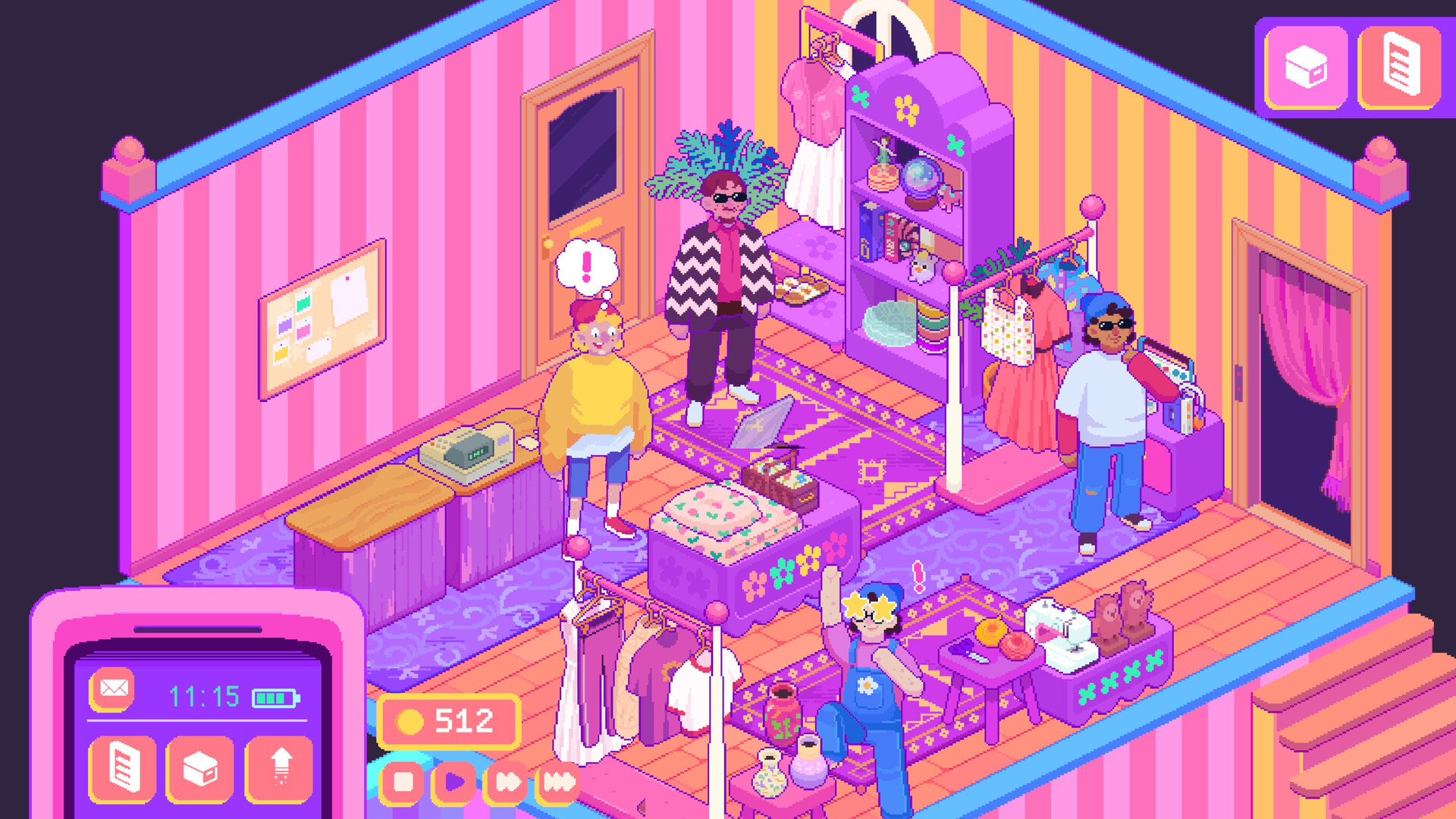
Thrifty Business*
I knew I would really like this game when it got revealed and I was really hoping it would get a demo. I was pretty sure it would as the developer’s previous games got demos and it did! I also played this one towards the end as a way to encourage myself to play through my demos list.
After you name yourself and your thrift shop (or randomize both), you jump right into managing a thrift shop. It turns out that you just bought a thrift shop from an old woman named Ingrid who has been wanting to retire for the longest time. Her shop is actually a pillar of the community in this small town and she thought you would be a great choice to hand it off to. Don’t worry, she makes sure to stay to teach you everything you need to know. Based on the demo, it does also look like the story here is going to be based around customers that will become your regulars (who are both name and have a set unique look). It looks like the storylines the regulars will have will progress as you buy boxes from them and complete their requests as they’ll talk to you once you buy their box and sell them their requested item until they mention setting up an event. Okay, I think it’s time to go into the gameplay.
Managing the thrift shop is pretty simple actually. The day begins with letting you do any prep that needs to be done. At first, the thrift shop will be pretty barren, but you do get some starting money to get you started. First up, you can buy decorations to, well, decorate your shop as well as shelves, clothing rails, and tables. You can decorate your shop the way you want, you just have to make sure customers will be able to access the shelves, clothing rails, and tables. You of course need items to sell and you can get this through the Messy-Ger app. This will have a couple boxes listed, ranging in price and the items within it. Before you buy, you’ll be able to see a sneak peak of what’s inside as it’ll tell you three items that are in it and a tag or two (though, it won’t just be that as you’ll get some…surprises). Your orders get delivered right away and all you have to do is unbox everything and put it on your shelves, clothing rails, or tables. However, you maybe shouldn’t stock your shop all haphazardly. I don’t think you’re told if there’s an effect in terms of selling, but you are told it’s recommended to group items by their tags. Like putting accessories together or antique items together. Some items also are shaped in a way that they can only fit longways, won’t be able to be put behind items or no items will be able to fit behind them, clothing of course needs to be hung on a clothing rail, and there are some items that need to be set on a table due to being too big. If you run out of space, don’t worry as you do have some storage space. Oh, and any trash you find on the floor you can clean up by just clicking on it (man, we need a trash can if customers are just going to rudely drop their garbage on the floor).
Once you’re ready to open up, you can and customers will come rolling in until it’s time to close. They’ll look around, hopefully pick something to buy, purchase it if they do, and then leave. Once you hit closing time and everyone is checked out, the day will end, you’ll get a little summary, and then the next day will come along. Once you complete your first day, you’ll also unlock the stamp cards. Stamp cards basically lets you unlock themed furniture, with each card representing the different themes. You can get a stamp, and thus unlock a couple furniture items in that set, through spending community points which you get whenever you open your shop. The amount you get is based on how clean your shop is, if you have decorations up, and how organised your shop is (which I’m pretty sure is how many items are grouped together). You’ll also see requests from regulars, which will ask you to set out a specific item so they can buy it, and set up events that’ll happen in the basement once someone asks.
And that’s the game loop. So far, I like Thrifty Business. It’s just what I expected, it’s cute, I like the writing style here, and I like the gameplay loop. I can’t wait until the full game comes out.




Recent Comments